



Why Most Battery Developers Fail at Zoning? #346
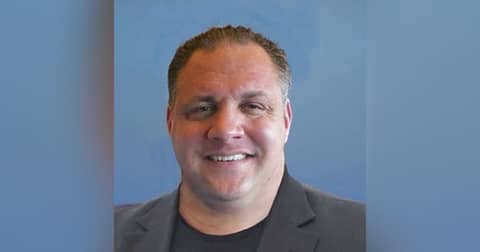






Eighty-five towns across New York state sit under battery storage moratoriums right now, and two of three Westchester County towns where Joe Tassone Jr. built successful battery projects in 2020 have since banned the technology outright. In this episode, Tim Montague sits down with Joe Tassone Jr., partner at onCORE Origination, a site origination firm working in 25 states on solar, battery storage, data centers, and EV infrastructure.
This episode covers the top three issues blocking battery development at the community level, why fire safety fears around lithium-ion storage miss the wider context, and what separates developers who close projects from those who waste millions.
Here's what you'll learn in this conversation about battery development and site origination:
- You'll hear the three biggest objections communities raise against battery storage projects.
- Find out why 85 New York towns currently sit under battery moratoriums, and how two of three Westchester County towns where Joe built projects in 2020 have since banned storage outright.
- Learn why Joe argues developers should never treat zoning as black and white, even in towns with outright bans, because public utility statutes and use variances open paths to approval through the judicial process.
- Understand how state-level programs in Illinois, Maryland, and Connecticut remove local NIMBY obstacles.
- You'll get Joe's three tenets of successful development: knowing where to go through parcel acumen, committing fully to a market with a clear pipeline vision, and persisting relentlessly through headwinds.
Joe's 30 years of site origination experience surfaces one clear lesson: developers who treat zoning as static codes and give up at the first denial lose tens of millions in project value every year. The industry needs to move from reactive to proactive, meeting with town and county associations before moratoriums pass instead of reacting after.
Connect with Joe Tassone Jr
Joe Tassone Jr. LinkedIn: https://www.linkedin.com/in/joseph-f-tassone-jr-a778a1190/
onCORE Origination Website: https://oncoreorig.com/
Connect with Tim
Clean Power Hour
Clean Power Hour on YouTube
Tim on Twitter
Tim on LinkedIn
Email tim@cleanpowerhour.com
Review Clean Power Hour on Apple Podcasts
The Clean Power Hour is produced by the Clean Power Consulting Group and created by Tim Montague. Contact us by email: CleanPowerHour@gmail.com
Corporate sponsors who share our mission to speed the energy transition are invited to check out https://www.cleanpowerhour.com/support/
The Clean Power Hour is brought to you by CPS America, maker of North America’s number one 3-phase string inverter, with over 6GW shipped in the US. With a focus on commercial and utility-scale solar and energy storage, the company partners with customers to provide unparalleled performance and service. The CPS America product lineup includes 3-phase string inverters from 25kW to 275kW, exceptional data communication and controls, and energy storage solutions designed for seamless integration with CPS America systems. Learn more at www.chintpowersystems.com
The Clean Power Hour is produced by the Clean Power Consulting Group and created by Tim Montague. Please subscribe on your favorite audio platform and on Youtube: bit.ly/cph-sub | www.CleanPowerHour.com | contact us by email: CleanPowerHour@gmail.com | Speeding the energy transition!
I mean, I wrote an article in op ed about a month ago, got published in a local paper here, because there was a town, one of the biggest towns in my area, in upstate New York, and they they banned, they just did an outright ban for battery storage. And they have a lot of industrial areas too. We're not just talking about resi and some of the statements that the fire chief was making and the town supervisor was making were just patently wrong. They miss it was 100% not factual. Like we have to evac everyone in a mile and a half radius. That's not true. It's never been true. But there hasn't been a I wrote an op ed, but like these are the things we need to get ahead of.
intro:The clean energy industry is moving fast. The deals are getting bigger, the technology is evolving, and the stakes have never been higher. Welcome to the Clean Power Hour, the podcast for solar, storage and micro grid professionals who want to stay ahead of it all each week, your host, Tim Montague, industry advisor and president of clean power Consulting Group, brings you unfiltered conversations with the leaders actually building the energy transition. Now. Here's your host, Tim Montague,
Tim Montague:today on the Clean Power Hour site origination and battery development. You know, here in the United States, the grid is burgeoning with data centers, with electrification of transportation, with electrification of everything, and the grid is a wonderful machine, but it is somewhat antiquated, and our means and methods of transforming the grid are somewhat limited. So it's my pleasure to bring back Joe Tassone Jr. He is the founder and Managing Partner of onCORE origination. He has originated 1000s and 1000s of solar and battery and other types of Real Estate projects. Welcome back to the show, Joe.
Joe Tassone:Thanks, Tim. Thank you very much. It's always an honor to know you and to be on your podcast. You have a great a great medium here, and it's always a pleasure just a I'm one of the partners. We have three partners, but for my ego, you could call me managing partners, but that's all equal. All equal at onCORE,
Tim Montague:partner in onCORE origination.
Joe Tassone:Thank you for correcting me. Founders, yes, and we've been in business for about nine years, and we operate in half of the states, about 25 states, and we do origination for solar, battery, you know, and data centers and Ev and we also do a little bit of we still touch cell towers, which was my industry, and like I said in our pre interview today actually marks my 30th anniversary. 30 years ago in April, the Thursday before the masters of 1996 I started doing work with a company doing site acquisition in Milwaukee, Wisconsin for Sprint spectrum. At the time, looking for land for cell towers. And since then, it's been a long road. Been in solar, renewable energy, for about the last nine, nine years, I believe so it goes by fast, and I think I've every time I think I've seen it all, there's always a new issue that comes up, a new problem, a new challenge. But that's what makes our jobs in our lives.
Tim Montague:Interesting, yeah. Well, congratulations on the anniversary. I I laud you for sticking to it. And for anyone who doesn't know, Joe writes a lovely newsletter every Monday, and so if you just go to his LinkedIn, you can subscribe to that. It's also on sub stack. But Joe, let's talk about battery development. I'd really like to shine a light on this. You know, I think of batteries in terms of earn, save, protect. Okay, you can earn with grid services. You can save money by doing energy arbitrage, attacking demand charges or capacity charges, buying low and selling high, and then you can protect your asset, your your building, your home, your community, from grid outages. Okay, so you can have resilience if the battery is big enough and you have the right switch gear when the grid goes down. And so batteries are they're like solar on steroids. Really. Solar is cool, but it only works when the sun is shining and the battery works. 24/7 and here we are in 2026 there's an explosion of battery development happening. This is because it is good for grid operators and good for consumers. And so there's an onslaught of battery projects coming into the built environment, and this is at all scales, from a home battery, right a Tesla power wall, 313 kilowatt hours to grid scale batteries, which are hundreds or 1000s. Of kilowatt hours, and humans sometimes don't like change, and bureaucracy sometimes don't like change, and so and so. There's pushback of various flavors. But why don't we set the table a little bit Joe, in your experience doing site development? What is it? What are the top three issues that developers need to be aware of when developing battery storage?
Joe Tassone:Yeah, it's a really good question, Tim, and just to take a step back from a historical perspective, I mean, we're origination land developers. We don't get too involved in the technical side, but we know enough about the technology and being in the trenches and dealing with property owners and stakeholders and municipalities, we kind of get a good flavor when we to your point. You know, I guess I will never like to use the word explosion when it comes to comes to battery storage, but it is, you know, for lack of a better word, it's been an exponential growth. And since we've been involved in it, when we started onCORE, we were just solely working and doing, looking for land for mostly front of the meter projects and community solar markets for solar. And in 20 late 2018 the company, one of our clients, came to us say, we really Con Ed is in New York's coming out with a emerging battery storage program, mainly in New York City, because of the issues they were having there with grid congestion and load issues, people didn't even know what batteries were. I remember we started doing leasing in Brooklyn and the Bronx for 10,000 square foot lease areas in in New York, there wasn't even the program yet. It wasn't cemented. And I remember going to a one of the, I think it was called SBI, or one of the, one of the older shows in 2019 and people were almost laughing like battery. I mean, when we were going out. And even 2019 2020, in in Con Ed Staten Island, I mean, no one, no property owners were getting proposals or letters. Now you go there, there's probably not a, I mean, I being serious when I say this. There's probably not a property owner and one of the four, I mean, no one's doing it in Manhattan, but the four boroughs who has any type of industrial land that has not received multiple offerings. So it's becoming incredibly competitive in the market. So and you know, fast forward now, and we'll go, we can go to a little bit more with the program. But the answer your question, the three biggest concerns that we see is the first one is fire fire safety. There is a lot of misinformation out there, and someone could just And the beauty about the internet is not only giving you the information you want, that's right, but you could also find anything you want to prove, whatever narrative you want to have. And we've in a world of nimbyism, so there's been a few fires, and unfortunately, they happen in New York, which has a very good battery storage program on the state level, there's been a Southampton, there's been a couple fires the same facility in Warwick, New York. So batteries have gotten a lot of bad press. So what? What that happens? What people do is they just have a they put up a barrier, and batteries now are not safe according to the narrative that it's out there, and it causes a lot of consternation. I mean, I went through this in the late 90s when cell cell towers were becoming prevalent. Even though there was a Telecom Act and there was strong state court decisions, town still denied cell towers, and a lot of them got built through litigation. And just because of that, not in my backyard, attitude, the difference that we're seeing here in and I want to expand on this a little bit later on, the municipal level and the community level is towns are usually when something gets banned or zoned out. It's usually a reaction. It's an emotional reaction. Emotional reaction. A company comes in and proposes something, it causes a lot of grief, and the politicians of the town just decide to write a code to not have any more whatever cell towers or whatever other types of buildings have caused that. You know, the making people upset this we're seeing towns now, without even projects, being proactive, banning I've seen codes that actually use the word we're banning batteries, which is, I'm not an attorney, but it's basically, it's very challengeable in a court of law. And batteries, what I always like to say, and again, this is number one, the fire risk New York City. The FDNY of New York, any application in New York City for this type of use, and a lot of other uses, have to be approved by the fire department, and they are one of the most strangest reviewing bodies in the country, if not the world, to get a project, even when we're doing solid. Antennas on rooftops. It is a very complex, stringent project, and they are allowing batteries, and some have been built in between high rise buildings and some of the boroughs. So they there is there always, there's always a risk. There's more house fires and gas station fires and car fires 20 fold. Then there's only been a handful of battery fires. So that's one of the biggest things, I would say, number one that comes up, because lithium does. Now, the typical lithium ion batteries that are being used, they are difficult to put out, but they're very contained. And the few fires that they have been there's been no no injuries and note, that's to my understanding. And there's been,
Tim Montague:let's get the other two on the table. Though there's fire, that's an important one. And And certainly, probably the first thing that comes to anyone's mind when they think of grid, scale batteries. What are some other issues that developers need to be thinking of when they're they're looking for sites for battery development.
Joe Tassone:Then the second thing would be esthetics. But it's such a far cry from from what the first issue of the fire, I would say just esthetically. If you're putting them in an area that is close to residential, they're going to you're going to get one. You know, people getting nervous about the the the fire risk, even though I believe it is unfounded, and the second one is just what it looks like. But that's, that's a far, that's a far. Number two from, from what the, the, what the fire issue
Tim Montague:brings up. Number three.
Joe Tassone:Number three, it, I got to think about this for a second is, you know, I off the top of my head. Tim, those are the top two that really come up. And there's a third one
Tim Montague:I would say. I would say, what else is going on in that jurisdiction? And are you dealing with a jurisdiction, whether that's a county or a town where there have been other moratoria, for example. You know, batteries are just now the tip of the iceberg. There's other forms of development happening. And you know what? What's really on my mind, Joe about this is the fatigue that some communities can get because there's pipeline development in rural America, I'm talking gas and CO two pipeline development, and there's, there's transmission line development. So there's, there's power lines coming through communities. There's solar farms coming to communities. There's wind farms, and now there's battery farms, and sometimes this layer cake can become a tipping point for communities. But if you're a developer, you absolutely want to be very careful about where you're focusing your energy, because some communities are more willing than others to work with the changing times. And some just put their foot down and say, No, we're not going to have wind or solar or whatever.
Joe Tassone:Yeah, no, it's a fair it's a very good point. And certainly you have to understand, when you're looking for sites, is understanding the the jurisdiction you're working within, and sometimes, and I've written articles about this too, where I've again, this comes from years of experience. I've had proposed projects in towns where I thought the climate it was going to be like my old boss would say, the final scene of Braveheart, like you're ready, it's just going to be brutal. And you go in there and you get approved in one meeting. I've also had other situations where the town has a perfect code. They allow it. They're, they're very apt to meet with you, and you walk in, and it's, it's like, to use the other, another movie reference. It's like the scene from Goodfellas when Tommy walks in and he gets whacked. You're like, what happened? You know, I thought this was going to be a cake walk, so never assume. And I see developers and companies, they get very skittish. They look at zoning being black and white, and it isn't black and white. Obviously, if you have a municipality like New York, is a home rule state, it's municipal, it's village, city, town ruled. I think they have 900 and some odd jurisdictions in the state. And it's of course, if you have a code that allows battery storage in certain districts and the setbacks are reasonable, that certainly makes the process easier. And if you do happen to get denied, you have a little bit easier path to litigate and get approval through the, you know, the judicial process. Now, that doesn't mean there's towns where they just don't allow it, and you have the right project and it's the right time, and you talk with the town and they realize that, and you can get. Prove via use variance. That's not to say that you should just always go for a use variance, but I see, I see too many developers just read a code and it's an agent. We're not going to do it. There's not a path to permitting. And I wrote an article. What does that mean? Exactly? There's ways, there's public utility statutes in the States, and there's don't give up. That's my biggest thing, because there is too many towns now that are that are out rightly banning these. There's something like 85 towns right now in New York. I could be off by a few that are a moratorium for batteries. There's towns that I've developed batteries in three towns in Westchester County where this is going back in 2020, 2021, they went through zoning without a problem. They got approved within six months. There was no opposition. Two of the three towns now have outright bans of battery storage. Now, I don't know if the impetus was a project that a reaction to a project that wasn't as favorable, but you know, by my biggest takeaway of all this, oh, people, I should say takeaway is don't look at zoning as just a black and white process. It's a lot of it's a lot of diligence.
Tim Montague:Personally, I think that developers need to become more savvy. We as a society also need to understand that there are costs to moratoria, for example, and we need to educate one another and our elected officials. You know, as we were saying in the pre show, it's, it's on one level. I i respect a H, J's decision to to create a band, but there is a cost to consumers, meaning the grid infrastructure is not going to get upgraded in that jurisdiction as a result, and this does impact consumers bottom line, not to mention the grid operators. Because if you're a grid operator and the grid is at capacity. You want lots of batteries because they're sponges, and they can absorb excess energy if they're you know, it's the middle of the day and the solar is cranking, and then they can release energy when energy is expensive or where needed on demand, right? Instantaneously. This is why VPPs are such a great thing, virtual power plants, because they can replace peaker plants. Okay, historically, we have these like 10 megawatt peaker plants, natural gas fired power plants that are mostly dormant, but then get fired up when the grid is at capacity on a hot summer day, for example, and everyone's cranking the AC. Well, that's very expensive. That's a very expensive asset for the grid operator to to own and operate that asset, largely because it's not operating very much and so, so batteries are replacing this older technology, and it's, it's, I see it as part of the smart grid. Like batteries are digital technology, and they're instantaneous, and they're multifaceted and they're much smarter. So I see them as as a whole, as a very good thing. But back to my comment about developers as developers, right? We have to be more savvy. Have a better ground game. Make sure that we're hosting educational sessions with consumers, with residents, with elected officials, so that they can understand because, as you said, there's a lot of misinformation on the internet. People freak out when they see a battery fire and they go, well, one fire means they're all dangerous. And we have to remember that there are a lot of things in the built environment that can catch fire. And the track record of utility batteries is not bad in the greater scheme of things.
Joe Tassone:No, I agree with everything you said. Obviously batteries are good. They wouldn't be, there wouldn't be a market if they weren't, and utilities are embracing them more and more. I mean, there are utilities you mentioned the peaker plant. I mean, New York City, up until several years ago, I believe, had a few coal peaker plants in operation. And you're right. It's analog the amount of money, time and energy that it takes to operate a peaker in our, you know, an analog peaker plant is absolutely ridiculous. And these are being placed by replaced by large battery farms. There's the DG level it is, you know, putting out, having even a five megawatt, 20 hour battery, say, in the New York City area with that can do on a millisecond notice, to put power into the grid or store power. It's really a no brainer at the end of the day. Now, the issue Tim is that people, you know, when you get back to the community level, I don't say people don't care about that. Hard for them to get that around their head, even when we were doing I go back to cell towers, because there was a lot of parallels there. There's an obvious need, you know, for cell towers, especially back in the day, you couldn't make calls. There was safety implications. But you would the vocal minority. You'd have 40 or 50 people that are affected by, say, the site of it, because it's in their neighborhood, and they would go to the meetings, and they would organize, and really, you know, speak loudly, write a lot of things on the internet, and the fathers of the town would get, they get nervous, and they would get denied. I mean, I've had, I've had towns tell me years ago in closed sessions, you know, hey, I know you're going to win in in you're probably going to win in a lawsuit, but we're gonna die deny you anyway. And that's that, you know, unfortunately, those people exist. They got to face their neighbors. It is unfortunate because it's cost a lot of time and money for the developer. And now we're seeing the tide turn a little bit where people want that type of technology and so, yeah, you know, to your point about being more proactive and savvy, absolutely, I believe our industry, and I'm not trying to impugn any of these associations, because they're wondering, everyone's wonderful industry, great people, overall, the industry associations work very, very hard, but We have to do a better job as an organization, as an industry, getting ahead of this. I mean, I wrote an article, an op ed about a month ago, got published in a local paper here, because there was a town, one of the biggest towns in my area, in upstate New York, and they they banned, they just did an outright ban for battery storage. And they have a lot of industrial area. Industrial areas too. We're not just talking about resi and some of the statements that the fire chief was making and the town supervisor was making were just patently wrong. They miss it was 100% not factual, like we have to evac everyone in a mile and a half radius. That's not true. It's never been true, but there hasn't been a I wrote an op ed, but like these are the things we need to get ahead of, and we need to start meeting with the town associations and the county associations and getting them from a proactive level. And then that's some of it's being done. And we can't, you can't fight every battle, right? So the more pro action we could take, the better it's going to be. We're not going to win every battle, but the reactionary, just reactiveness costs so much time and money at the end of the day,
Tim Montague:the Clean Power Hour is brought to you by CPS America, maker of North America's number one, three phase string inverter with over 10 gigawatts shipped in the US. The CPS product lineup includes string inverters ranging from 25 kW to 350 kW, their flagship inverter, the CPS, 350 KW is designed to work with solar plants ranging from two megawatts to two gigawatts. CPS is the world's most bankable inverter brand and is America's number one choice for solar plants, now offering solutions for commercial utility ESS and Balance of System Requirements, go to Chint Power Systems com or call 855-584-7168, To find out more. So tell us about some success stories. You don't have to give names, but talk about the types of projects that you're working on and where you've seen a good combination of collaboration between developers and communities, or developers being very selective about technology, location, size, these kind of basic facts of doing any project development.
Joe Tassone:Yeah, there's a project. And this goes, this is actually because remember, this is a lot of this is relatively new. So there's, believe it or not, even though we've been doing this for several years, there's not a ton of case studies out there right now. I mean, we've, we've gotten sites that were at least five, six years ago. They're not even built yet. But a good example of this is more on the PV side, but it's, it's one in the same. You know, batteries is a technology. There's people that are denying solar too, and it's a little less controversial Now, depending on where you are. But listen, there's a solar project that, and that, that same town that I was talking about, about 10 minutes from me, there's a solar project proposed, and it's, I don't even think anyone's going to see it, but this subdivision next to it, the neighbors are organized, and they are vehemently against the project, and they have the voice of the time. They have the voice, and they are connected, and they're doing everything they can to stop that project. So we had a project in my former company. It's about four or five years ago, and it wasn't a city in upstate New York. Work in a commercial area the the city, the large city, they were, the council was very upset because the project came in, it was on agricultural land, and it caused a lot of a lot of problems, a lot of grief. The company that did it were was not, was not, I don't think they handled it very well. So what is, what does the city do? They react, and they put in a moratorium, supposed to be a three month moratorium. At the same time we were working with a piece of property was commercial. It was actually a quasi city entity, a regional development agency, through the moratorium. And again, this is a town, now a city, that had a moratorium, and we still went in anyway, with our with our we didn't put an application in, but through the process, they extended another three to six months, nine months, they came out with a very stringent code. It was, it was one of the worst Solar Codes I've ever seen. It basically killed our project. But we were able to work with the planning department, with with the City Council, say, hey, we pushed back. We redlined the code. This is all public. Went back and forth. At the end of the day, they came out with a reasonable code. They they appreciated our input. We got our project approved, and it's well on its way. So that was a it was an uphill battle, but we were able to it was the right site to Tim, you know, let's be honest, it was, it wasn't a commercial zone. It was sort of shielded from residential. So that's the other thing, too. I mean, if you have the right site, your Your fight is going to be a little bit easier, or no fight at all. But, you know, we got to go where the grid is right. So you're not always going to have a perfect project commercial zone.
Tim Montague:Yeah, you can't always. You can't always be super selective about where you want to site a project, because you are at the mercy of where there's grid capacity and access. But Joe, you're, you're referring a lot to New York State, which I would argue is probably one of the most difficult jurisdictions in the country to be a developer in whether it's wind, solar batteries. But do you have some experience from other jurisdictions, other states, like here in Illinois, we are getting a combination of grid scale batteries and a fair number of behind the meter CNI batteries now, as well as residential batteries, and this is just the beginning. We have new VPP legislation that is going to really open the floodgates for front of the meter storage. But what's going on in other parts of the country, and what are some success stories? I'm very keen to bring good news. As much as there is challenges. There are challenges for the industry. I want to try to identify what's working and what can my listeners learn from in their jurisdictions, and my listeners are all over the country.
Joe Tassone:Yeah, no, it's, it's a good that's a good segue. Tim, I mean, we work in in a lot of states. We do a lot of work in miso, Illinois, we're doing, we're doing battery storage right now leasing, but it's very early stage, so we're not to the point of, to my knowledge, I don't even know if there's, there's actually been a zoning application submitted. I mean, the program really started getting amped up about nine months ago, but in, you know, doing some of the bulk the utility scale. And we're seeing some states now, and maybe this is more on the solar side. You know, taking, taking jurisdiction on the state level. I know Illinois has some state has legislation, or a code, actually, where it gives some relief from certain setbacks. The state of Maryland has, if you're over two megawatts, I believe. And I'm not an expert in every state, or pretend to be, but you know, you can go to a state level process, which is a little bit it takes it out of the nimbyism. And you know, we've, we've looked, we've done some projects in mass, in some industrial areas that the towns were receptive, you know, to the battery storage project. One was out in Eversource. It was actually battery in combination of storage. And it went through in a couple meetings. And there was no and there was a it wasn't an industrial zone either, but, yeah, you are seeing, you know, some towns open to this, and we're also in Connecticut. For instance, Connecticut has a Connecticut signing Council where batteries are regulated. It's an onerous process, but again, they have jurisdiction over it, and I it takes it out of the the local municipalities jurisdiction. I'm not always saying that. Say a good thing, per se, but sometimes it it just gives more of an objective view of things. So there is. It's not all, it's not all negative. I mean this, this is development's always tough, and. Even in New York, but there's tons and tons of success stories. Like I said, we got the three projects built in Westchester. There's several, many sites now that are moving forward. So yes, I'm glad you brought that up, because I don't want to only accentuate the the bad cases. But right now, there are some areas that need a lot more focus, just because of, you know, there's not many states that have a have a sort of a DG level program. I think there's only about five right now.
Tim Montague:In Illinois, in 2023 we got preemptive legislation that prevents counties from creating more restrictive rules around citing wind and solar than the state level. So we have a we have a state rule about setbacks and this kind of thing. It's very easy to tweak numbers in in municipal codes like setback, setback requirements from fence lines or property lines or buildings, and quickly negate the possibility of developing a project in that area altogether. This happened in my own county with wind. Our wind ordinance was too restrictive, requiring too long or too Yeah, too long a setback from the wind farm to local homes. And lo and behold, we have virtually no wind turbines in Champaign County. We're surrounded by counties all full of wind farms, but very few in the county of Champaign. And you know, I haven't been in the weeds on permitting battery projects, but when it comes to solar, the misinformation that I've seen is often in in the realm of ridiculous, like people arguing that the solar farm is going to make too much noise. And yes, inverters do make noise, but if you've ever stood next to an inverter in even a rural area, there's all kinds of ambient noise, there's dogs barking, there's sirens, there's wind and the the inverter, which only runs during the day, mind you, so it's not at all going to interrupt people's sleep because the sun isn't shining at night. So anyway, I'm I'm sure the ridiculousness, so to speak, is even worse when it comes to battery storage. And it does bring up that I have, I have some colleagues that were working with the Illinois fire Institute, which is a training and Safety Institute for fire departments around the country. And they were creating a program to train firefighters about grid, scale, batteries, because, you know, you can imagine, there are 1000s and 1000s of jurisdictions, right, that are running fire departments, and they're all reinventing the wheel around battery safety. And it's like, no, we need to level the field and have a general understanding of what works, what we you know, what is safe and what's not?
Joe Tassone:Yeah, we we get a lot of well, we see it, where fire departments push back on this, and some of it is, is just fear, a lack of knowledge, lack of equipment. But developers will certainly train fire departments and even provide any equipment that they may think they need within reason. And my understanding, it's not a sound like it's a million dollars, and so that that is, it comes back to the education, I believe, unlike other types of of buildings or projects, it always where the fire, the fire, usually a fire department will pine on the turnaround radius. Even a solar project, make sure we get our trucks in there, turn around outside of that. They don't really make any any ways for you. But with batteries, they seem to have a little more. It just goes back to because, unlike other other things that burn the lithium ion just it takes a while to extinguish, and that seems to generate the nexus of fear, even though, when you know there's there was a really good article earlier this year by actually, I think it was a fire, a very prominent fire chief, and the Warwick, New York's A famous battery, miss, I think it got on fire three times, two or three times. I think they condemned it ultimately, and it basically the point of the article is this, this did exactly what it's supposed to do. Everything was contained, no one got hurt, caused no outside damage. There was no you know, one thing you'll hear about, all the noxious gasses. But and. Any expert will say that it's there's no different than in a house fire. Whether one of the articles I wrote last year, and this was I was driving on a main road by me, and it was closed off for a whole day, there was a gas station fire. Gas Station fires. If you look it up, I want to say there's, there's hundreds of them a year. The road, there was white foam all over the road. It destroyed the gas station. It destroyed four or five vehicles. I don't believe anyone got injured, but there are injuries and deaths every year, but the gas station fires. Gas stations are located, sometimes right next to residential neighborhoods in a commercial area. You might see a subdivision behind you. They're on four corners a lot of ways. There's cars, there's people, there's 16 year old person that just got his license, versus a person that is shouldn't even be driving operating flammable liquids, right? We take this for granted, and there's fires all the time, yeah, with the great rare
Tim Montague:what in our last few minutes together, Joe, let's talk about what your experience is with successful developers. You've obviously worked with a whole bunch of different developers. Your your niche is origination, right? You are identifying parcels that meet certain criteria and getting into dialog with those owners and helping to get site control for developers who are then taking the projects further down the road. But what does it take, Joe to be a successful developer in your in your experience?
Joe Tassone:Yeah, this is, this is what I'm passionate about. What we're passionate about is why we started the company. Is development, getting site control, to me, is the most important thing you can do. We've seemed to focus in this industry so much on finance and technology, even policy, which is critical. I say that's the oxygen of the business and but if you don't have land, if you can't get the owner to sign on the line that's dotted, you don't really have anything, it doesn't matter. And we lose, we lose 10s of millions of dollars. I see customers losing millions of dollars a year because of lack of execution. So there's a lot of things. What I would say that, you know, the tenants of being a good developer, the first thing I would say is, is just having a clear understanding of where to go, one of our mantras, and not to sell onCORE. But it's not only what we give you, it's what we don't give you we show our clients, because you could waste a lot of time and energy looking in areas where they're either they're not leasable, there's title issues, there's floodplain issues, bad circuitry. That's a little bit of a, you know, a gray area sometimes. But number one is knowing where to go and having an acumen of really zeroing on the right parcel. Some of that comes with experience. Again, it's not always just black and white. Sometimes it is. And number two is to have a clear vision and goal I if, if these companies, you know, the IPPs right now, there's always focus on M and A and buying late stage projects, but we're seeing a much more of an emergence, even with all the headwinds we've had the last year or so of doing real, true origination and ground up development, especially now that the ITC might be going away for solar at some point, or what is going away. So it's having that's clear, like you got to build pipeline. I hear companies now we're just focusing on, you know, Safe Harbor and this, of course, that's important. But if we learned one thing, being in this business, and again, I'm nine years, you know, some people have been in 18 years, is development never stops if you if you cannot play this game, and this goes your number tenant, number two, you cannot come in and go out and step in with with, you know, test the waters. You have to be all in as a developer. You can't go into a mark and say, Well, what if the ITC pauses, it goes away, and this state incentive does that. That's not to say not being judicious and being vigilant and maybe pulling back some capital, but you have to be committed to a market. You have to be committed to an end goal. Because what I've seen is the most successful developers are the most relentless. They're the ones that persevered. They're the companies that don't stop developing and they appreciate pipeline. I hear company, oh, we have too much pipeline. That is the dumbest thing somebody could say, because I've been there. Pipeline goes like that, right the money you think it's going to take you to develop triple it. So just be aggressive. You gotta be just persistent, and have a vision of where you want to go and stick to it, and all the other all the rest of this stuff is really just blocking and tackling.
Tim Montague:We're going to end the show there, Joe, I really appreciate your time. And again, congratulations on 30 years in site development. That's really cool. Hey guys, are you a residential solar installer doing light commercial? Small but wanting to scale into large CNI solar. I'm Tim Montague. I've developed over 150 megawatts of commercial solar, and I've solved the problem that you're having you don't know what tools and technologies you need in order to successfully close 100 KW to megawatt scale projects. I've developed a commercial solar accelerator to help installers exactly like you. Just go to cleanpowerhour.com. Click on strategy and book a call today. It's totally free with no obligation. Thanks for being a listener. I really appreciate you listening to the pod, and I'm Tim Montague, let's grow solar and storage. Go to clean power hour and click strategy today. Thanks so much. Check out all of our content at cleanpowerhour.com. Please tell a friend about the show. That's the best thing you can do to help others find the show. And please give us a review on Apple or Spotify Joe. How can our listeners find you
Joe Tassone:sure I'm on LinkedIn? It's under Joseph to your website is www.onCORE, O R, I g.com, that's O n, C, O R, E, O R, I G, com. And we have a good website, a lot of good stuff on there. We're also on LinkedIn, but yeah, thank you very much. Tim. I really appreciate it. I love talking about this stuff, battery, solar, everything, data centers. It's really where the future is at. And it is an incredible business we're in. If you see the, if you see the three things that I'll end with. This that I see that really gets me excited is one the it's unfortunate, on a personal level, so electricity prices are going up all the time. Number two, the amount of demand right now, and there's not enough capacity, with all this new AI and all this technology coming in, and you see a continued amount of investment I've been in industries where you couldn't, you wouldn't see $1 contribute into an industry from a from a JP Morgan, or a big institutional investor. So it's there. We just have to execute and stay positive
Tim Montague:with that. I'll say, let's grow solar and storage. I'm Tim Montague. Thank you so much, Joe Tassone Junior, Thanks, Tim. You.
