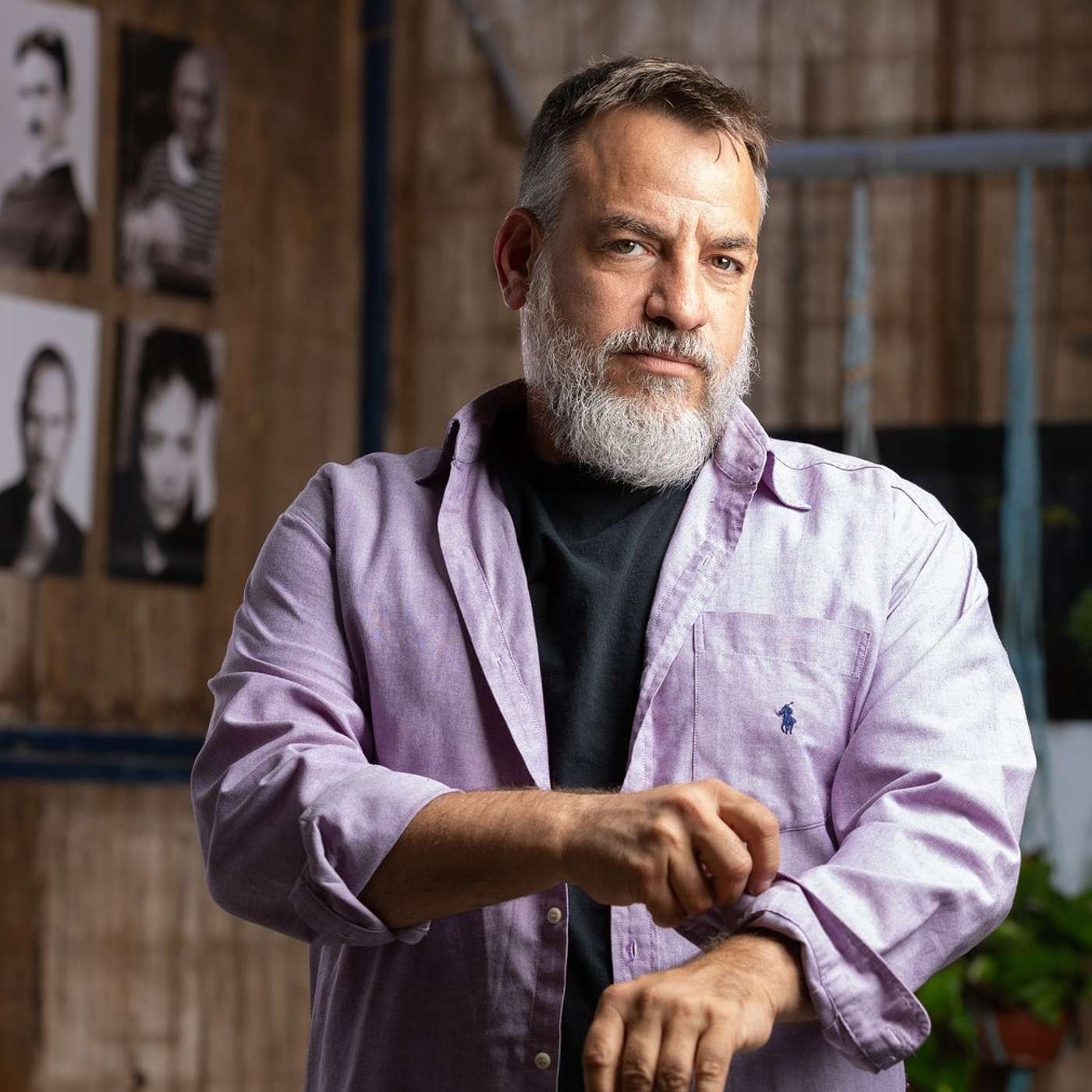
Welcome to the Clean Power Hour! On today’s show, we are joined by Yaron Ben-Nun, Founder and Chief Technology Officer for Nostromo Energy. Yaron shares his inspiring story of how he went from a jet fighter and a film director to founding Nostromo which turns commercial building cooling systems from grid burdens into clean, safe, and cost-effective energy storage assets. a renewable energy revolution with his sustainable water-based energy storage solution.
We discuss Nostromo’s pilot project in Los Angeles, which harnesses the power of renewables and their thermal battery to attack demand charges, save money and reduce commercial-industrial carbon footprints. Yaron also shares his thoughts on how renewable energy solutions are impacting the current energy landscape, and how we can be more mindful of our energy consumption and create more efficient and sustainable solutions.
We’re excited to hear Yaron’s insights on renewable energy solutions and to gain a better understanding of how Nostromo Energy is revolutionizing the energy landscape. Tune in to the Clean Power Hour to learn more about renewable energy solutions and to get the latest insights from Yaron Ben Nun.
Key Takeaways
- The thinking behind starting Nostromo Energy
- What Nostromo Energy is and what projects they are currently working on
- Their proprietary technology and its anticipated lifetime
Connect with Tim
Clean Power Hour
Clean Power Hour on YouTube
Tim on Twitter
Tim on LinkedIn
Email tim@cleanpowerhour.com
Review Clean Power Hour on Apple Podcasts
The Clean Power Hour is produced by the Clean Power Consulting Group and created by Tim Montague. Contact us by email: CleanPowerHour@gmail.com
Corporate sponsors who share our mission to speed the energy transition are invited to check out https://www.cleanpowerhour.com/support/
The Clean Power Hour is brought to you by CPS America, maker of North America’s number one 3-phase string inverter, with over 6GW shipped in the US. With a focus on commercial and utility-scale solar and energy storage, the company partners with customers to provide unparalleled performance and service. The CPS America product lineup includes 3-phase string inverters from 25kW to 275kW, exceptional data communication and controls, and energy storage solutions designed for seamless integration with CPS America systems. Learn more at http://www.chintpowersystems.com
0:50
Now this is something that many doesn't know that I would like to elaborate on that your kWh consumption is actually in charge of most of your carbon emissions. If you're a commercial building
Tim Montague:
1:03
The Clean Power hours brought to you by the Clean Power Consulting Group. I'm Tim Montague, your host. Please check out all of our content at cleanpowerhour.com Give us a rating and review on Apple and Spotify. That helps others find this content, check out our YouTube channel, just click on the YouTube icon. And subscribe to the show to the show on YouTube. Today on the Clean Power Hour, attacking the duck curve with a thermal battery. My guest today is the founder and CEO of a company called Nostromo energy. Welcome to the show Yaron Ben-Nun, the CEO and founder welcome.
Yaron Ben-Nun:
1:38
Thank you very much do you mind the CTO and lately, we had, we have a new CEO Yama, cherry, which is doing very well. And I'm the CEO and founder.
Tim Montague:
1:49
Awesome. You're welcome. You're welcome. Looking forward to learning more about your technology and why you are choosing to enter the US market in the California Los Angeles area. Tell us a little bit about yourself Yaron and how did you get interested in energy? And why did you found Nostromo
Yaron Ben-Nun:
2:09
I was this is my third career. I was a jet fighter pilot when I was young. At the age of 25. I started my second career, which was I was a film director and author. And I did the mainly commercials here in Israel and TV commercials and music videos. And it's 2008 or 2009, I came to the conclusion that that I would like to find something more meaningful to do with my life. And the clean energy revolution just started. And solar was all you know, every everybody were talking about solar power, and I decided to change careers for the third time. And then I went to start work for a startup and endurance of heating and cooling, clean energy, you know more using environmental energy in order to lower electricity consumption with hybrid systems using heat heat pumps, and then I established and under big data analytics company, we chair gave a deep analysis to factories to manufacturers about their energy consumption towards their production volume. And that went for four or five years. And I learned a lot about the energy market. And in 2016, I had this I would say big in interest in understanding if solar become so cheap, and I sold like everybody that solar going to be the next, you know big thing in energy, and that we know that the sun is shining and then setting down. And so the big question became a storage. And I thought to myself, how come everybody are talking about electrochemical solutions, which has their own, you know, downsides, many, many issues. But nobody talks about water as a means to store called energy. At that time, we already knew only two things. The first that water are the best material in the world to hold called energy because of the latent heat because of of the capacity of water to hold energy when they're changing phase from liquid to solid, what we call a cold call cold ice. And then the other thing that air conditioning are taking a vast part of the energy consumption at peak demand. Just three weeks ago, there was a heatwave in in south western United States and in California in new record was of peak demand was broken after 1216 years, I think from 2006. So the connection between peak demand high demand and heat waves is very known. And this is because of course the cooling systems. So So yeah, so I went to investigate how water can should be used in order to maybe take part of the energy storage revolution.
Tim Montague:
5:16
Excellent. So we have this circumstance now. Where solar energy is becoming super cheap and affordable. We've We've broken the two cent mark for solar PPAs here in the Midwest, for commercial industrial applications, which is incredible. And you know, grid power for a large user in the Midwest might be four cents or five cents. Of course on the West Coast, and on the east coast of the US it's much higher. Customers could pay in the 20s or low 30s For Power in California, which is one of the reasons why California is the most mature solar market because solar pencils, so well there. But you mentioned these, these HVAC loads being very high, and they're getting higher as, as heat waves are increasing in frequency and extremity. Across the globe, we're going to be spending more and more energy on air conditioning. And so you have created a technology that stores energy as ice. And we're going to show a quick video from your website Nostromo energy. Is it Nostromo dot energy? Is that the website? Yeah, that's right, this Romo dot energy, so check out their website. And it shows very graphically how this works. And that's very cool. And you mentioned the latent heat of water, which is which is also a very interesting phenomenon. Water does not change temperature easily, right? It absorbs a lot of heat, before it changes temperature. And, and then when and when it makes the phase shift, especially right. So it is that phase shift, which is which is a critical element to your technology, that this is also a fairly complicated market. To tackle, though, I have to say, you have all these rooftop units, right? People who designed buildings tend to put these, what we call rooftop units. These are chillers. These are HVAC units, and blowers and other equipment on these rooftops. And so sometimes they can be quite crowded to begin with. But tell us a little more about Nostromo. What is the status of the company and you have a couple of pilot projects in the works? Are they do you actually have installations in the US now?
Yaron Ben-Nun:
7:52
And yeah, so the store was established in 2000 is the early 17, officially, and and since then, we became a year year ago, we became public. And we raised about $30 million to this day. And we have our technology is proven and it has been tested in many ways. And I'll maybe elaborate on it later. And we have three systems already working in Israel, the first one was started working in summer 2019. And we have another three systems under construction here in Israel and one big system and we'll start construction soon in the Hilton beverly hills in Los Angeles. And we'll serve the Hilton and Waldorf Astoria, which is next to the Hilton in the Bronx, most hotels are using the same cooling system and cooling is a major contributor to the peak demand phenomenon. And therefore, a huge part of the ramp up this phenomenon that we know from from the peak the the back curve is actually you know, a drop into solar production in which creates a ramp up in the demand for fossil fuel energy and in the instability of the grid gets, you know, to a critical point. And we believe that if commercial cooling systems and industrial coexistence will be become any thermal energy storage units or entities. A big part of this dilemma or this challenge can be solved using clean technology using water. We look at the market of electric chemical solutions. And we know that there are huge problems to put them inside the cities. And we believe inside buildings because of safety issues. And there are other issues and other concerns with electric chemical solutions. We believe that water should and must have a place inside the cities transforming building into thermal energy storage entities and by that support the transition of the grid towards clean energy and stabilise the grid at peak hours especially when the sun is setting down.
Tim Montague:
10:25
Yeah, so So you're you're you're putting this thermal battery on on the rooftop or on the ground or in the basement. It can go anywhere in the building so to speak, right? It just needs to be close to the facility because this is a thermal application and long you just don't want long runs right there's that's going to create inefficiencies. But Can Can you can you describe your technology in K kWh terms as well, like, how big a battery is this? If you have a one, you know, in lithium ion technology, we often talk about megawatts, okay, a one megawatt four megawatt hour solution would be a good size industrial solution, one to 10 megawatts would be a CNI solution. And then, of course, with utility scale, we're talking 100, or several 100 megawatts and megawatt hours. How do you describe the footprint so to speak of, of Nostromo?
Yaron Ben-Nun:
11:24
Great, great question. So So we're talking only about medium and large commercial and industrial buildings. And in the Hilton Beverly Hills, we're putting equivalent to 1.5 megawatt hour. And I'm saying equivalent, I'm comparing it to lithium ion batteries, and I can avoid like electric consumption of 1.5 megawatt hours, or if you would like it to look at it at capacity, that will be about a 400 Kw for five hours. This is gonna be the reduction in the in the capacity, or the power rate of the of the hotel, and we are told this is our basic, I would say size, we would like to size our systems around two to three megawatt hours, inside buildings, medium, large commercial buildings inside the city. And the biggest, I think, challenge here today, and because we see many of these projects of solar plus storage and so forth, a running you know, in the Mojave Desert, I saw a great project and outside of the cities, but we know that the distribution system is saturated, and soon enough with the electric vehicles, we believe that buildings will have to start participate in helping the grid you know, mitigate all these peak demand and instability. And we are already have a shovel ready technology to be, you know, presented and demonstrated inside the cities of Los Angeles, in San Diego. At first we have several projects that are undergoing and contracts are being signed as we speak. And we want to enter this is actually the I would say one of the only markets which is mature enough to be a commercial or it's economical, viable. And, and you know, the numbers on the front metre front side of the metre. And I can share with you that if you put energy storage inside building a under Sankofa, California Edison, or SDG, for instance, you can yield about 100 to $140 per each kWh installed, meaning nameplate of the system. And so if for the ability to charge and discharge one kWh on a daily basis, you can yield up to $140 on a yearly basis, and since the cost of putting a one kWh of our technology will be anywhere between 500 to $800. And this is very because of the labour cost, and we are working to lower these costs. Because the cost of our technology, if you take our batteries in our control system, and before you put it will cost less than 400 or $350 per kWh installed, but the labour costs are a great deal in in California, for sure. And so that will give you about five years six years of return on investment. Simple our why if you can actually bring back the$140 per kWh per year.
Tim Montague:
14:43
Okay. And that$140 value is because you're attacking a specific time of day, right when energy prices are going up, because demand is so high in the late afternoon, for example, right?
Yaron Ben-Nun:
14:58
very precisely, we are attacking the demand charges part of the bill mainly it's called deal management. We're not yet and we will be in the future, but we're not yet into the in salaries or you know, frequency regulation and so forth that that is not yet available, but we are doing demand charges reduction on the peak demand and in Southern California Edison and SDG and it can get to 40 to $50 per kid per kW at summertime. So you can for five hours you know that once a month you be charged you'd be fine either way on your highest power capacity. So we are in the capacity market mainly less on the time of use. Because in California 55 to 60% of your power bill will come from demand charges and not From energy from the KW side and kWh.
Tim Montague:
16:47
Yeah, that's such a strange phenomenon in a way, if you're if you're not geeking out on energy bills on a regular basis, you don't realise that the kWh charges are actually a relatively small portion of a bill. There's capacity charges and demand charges, which can be 30 to 50% of a bill. Here in the Midwest, we attack capacity charges with storage, our demand charges are relatively low, in the greater scheme of things. It's vice versa on the coasts, and you're attacking demand charges. But that is, you know, the primary value of a storage device is that it is a sponge, right? It absorbs extra energy when the sun is high in the sky. And solar is cheap, and grid energy is cheap. So you're storing that charging the battery. And then as the afternoon hits, and the sun goes down, your solar is not producing, and you need storage, and then you can attack those expensive demand charges with a battery, in this case, a thermal battery. How tried and true is the technology Yaron like, is this off the shelf? Or is this something that you guys had to invent? From from soup to nuts?
Yaron Ben-Nun:
18:07
Okay, so so it's a good question. And I storage has been around since before the electricity was, you know,
Tim Montague:
18:16
indeed, it was the main form of HVAC back in the day, right, just collecting ice in the winter from the from Frozen ponds and lakes, and then moving it to other places.
Yaron Ben-Nun:
18:29
But in the 20th century, and since I think 1947 or so, there is a very, you know, old company, traditional ice storage doing traditional called kalmak. We appreciate what they're doing. They've been doing it for many, many years. But this is the technology called Isom coil. And actually all our competitors, if you might say, so are using this technology ISIL coil, meaning building a big body of ice around coil, and in the coil, you just run in antifreeze fluid. So when you're charging, you go below 32 finite, and you start to build this block of ice. And when you're discharging, you run the same fluid, but now it will be cooled by the by the ice around it, and it will be heated when it's cooling the building and fluids. The downside with this, or the problem with this technology is that it's totally not fit for retrofit, meaning you can build a building around it because it's a massive tank of ice. And very little commercial buildings can actually embrace this technology. If they did not took it, you know, in consideration when they the building was designed, we came up with a new design, it's called ourself called an icebreaker. And for your question, each iceberg can hold 10,000 hours of cold energy, which is equivalent to between seven to 12 kWh that really depends on what kind of cooling system I'm avoiding when I'm discharging the cold energy. But let's call it 10 kWh for each building block. These looks like Lego blocks, you know big Lego blocks that you can put in any shape and form so that the system is actually formless and it will be situated and if for each building, where the building can put it and it will be no you know, no concern of taking valuable real estate and the volume. Therefore the volume of the system of the system can be very well you know, used, it can be leaning on walls, it can be below your feet, it can be on initial formation on the rooftop and and we enable buildings to retrofit their their cooling system their very traditional old cooling systems. With our system, the technology that we are using, it is not ice on coil, it's the other way around. It's called Cold encapsulated ice, meaning in each and every cell we have hundreds of of HDPE it's kind of plastic capsules, the water are encapsulated in these capsules and the fluid goes around the capsules and not the other way around that the fluid goes in the coil. And that gives you a lot of advantages. It gives you resilience and durability because if one of the of the capsules killed, you know, it collapse, there's nothing really happened. It's a little bit one They're inside the the glycol or the antifreeze stream, on the other way around. And on the ISIL coil, if there is a break in the coil, the whole, you know, big tank will be contaminated with the antifreeze, so the cell will lose its ability to store energy. And there are other advantages, and one of the most important one is the stable discharge rate at the end of discharge. Now, you should know, and I'm sure you know that every battery cell, it can give you power, and, you know, related to the potential differences. So when it's full charge, you can get a lot of power, a lot of momentarily power of it. But when the battery goes low, the power rates will be lower. So the question you might be asking how a Tesla car or any Evie, and has 5% in his batteries, but still, you will push the power, you know the panel, and you'll get 100% of the power. So the answer for this question is that EBS has 1000s of batteries, so so like Tesla have might have 3000 batteries, meaning that the computer can choose how to work with these low, you know, potential batteries in a parallel fashion. So then you can get at 5% of the total energy capacity, you will, you can get 100% of the power, because the computer will lose many, many, many low, you know, energy batteries, but in parallel fashion, that's what we actually did, to better the stability of the discharge rates in our system, because in ice goes just the same, if you have a lot of ice, you can get a lot of cold energy out of it. But once the ice starts to melt, to thaw, there is water barrier. So the power drops, we did the just like a Tesla car, we put hundreds of capsules in each cell. So therefore we can better control the power rate. Because we use them in parallel. So we can actually, you know, stabilise high power rates at the second half of the discharge. And this is really critical for the economics of your system that you will you know, build only the the size of system you can you need enough bigger in order to squeeze the lamb on and you know, get more energy at the end of the, of the sequence of the five hour sequence. Therefore, our depth of discharge DoD of the sea of our batteries is 94%. Within five hours, this is really, really, really high for isotopes that has never been presented before such high depth of discharge that improve our economics overall. And I would say the efficiency of the whole operation, it's not only about efficiency, energy efficiency, this is a different subject on talking about operational efficiency, how much you will invest, you know, and what you will get out of it.
Tim Montague:
24:37
Okay. Let's talk a little bit about the logistics. You're a manufacturer, and a technology company. project development is another suite of experiences and who are you working with in order to bring this technology to the end user,
Yaron Ben-Nun:
24:56
and AR and design comes from the headquarters in Israel, but we have a branch in Los Angeles, and San Diego. And we are a as for now when I when we speak and we're going to change it soon maybe. And we as for now we are manufacturing the envelope and the capsules outside of the United States. But we assembly the sales in southern Los Angeles area. And I believe that next year, we're going to move all our production to the to the United States because the EITC the the inflation tax inflation Reduction Act passed and you can get another 10% out of we can we can get actually 30% tax rebate on our systems we are eligible for that and if we will manufacture all our system inside the US we will be illegible for another 10% So we might move all our production to the US will produce the on US soil. So yeah,
Tim Montague:
26:04
yeah, everybody is very excited about the IRA, the Inflation Reduction Act and you mentioned the ITC that is the Investment Tax Credit on on renewable energy products, solar storage and wind technologies. So we have very generous incentives now and and the US is really a very, very sweet market which is why the Europeans and the middle middle Middle Easterners like yourself are are coming to the US because there's there's a lot of opportunity right we we have not embraced the energy transition is quickly as some other parts of the world because we have very cheap grid energy and cheap fossil fuels. Now we're, we're realising the pain of climate change and and luckily the Biden administration is taking that seriously and and and supporting the energy transition. So, it's heady days, but my question is about project development are you yourselves doing the project development or are you working with partners on project development,
Yaron Ben-Nun:
27:13
okay. So, so, the development part of the project is done by us this time at this time, but I believe that soon enough, we will find partners, but we need to put the you know, our first demonstration system in the belly of them up and running before powers will, will follow us and but we do have partners on the on the installation side, which is a AGCO This is a huge EPC company in Southern California, they are doing the installation, they are the general contractor and they are our partners for this. This is a complicated installation, and not that complicated, but still you are entering you know, facility, which is very sensitive, the Waldorf Astoria, the Hilton. These are very purchased prestige, you know, venue and the it's not easy to enter the the systems and you know, do some piping works. So we have the best of the best working with us. And soon enough, I'm sure that we will find partners that will do the business development or the new, you know, sales with us, once we will prove that this system is, you know, financially viable. And we will do that, give us three months or so and we'll be happy to talk with you again after the system will start running excellent performances, the performances of the technology are very, very high. We are we believe that we will show around 90% that full round trip efficiency, this is at the highest end any energy storage technology can be proud of, and then we have zero liquidation or close to 101 percent liquidation after a 6600 cycles. This is our test that has been done, you know that the lithium ion batteries has about 30 to 40% degradation after 10 years or 3000 cycles. So we have a really, really interesting value proposition on the on the how clean it is and how durable it is. And safe safety is a huge issue. When you're talking about energy storage inside buildings, we present a totally totally 100% safe technology to be put into buildings for many years,
Tim Montague:
29:27
Of course, oh the lifetime of the system what is the anticipated lifetime of a Nostromo energy system.
Yaron Ben-Nun:
29:33
So, I will I will talk about ourselves and of course piping and you know in the chillers and you know, this same mechanical equipment, the life the longevity of these systems are is well known, you need to maintain them and you can run it easily for 1520 years if you do good maintenance, and ourselves. And we give a guarantee for 10 years with less than 10% of liquidation. This is guaranteed, and we believe that the system can work 25 years and with no problem. And of course, what the main thing we needed to be taken care of is the the fluids inside the system. So we have a very harsh protocol for every three months. We check the fluids we check for biological or any other, you know, raster or any other performance, the pH of the water and we know how to keep this water stabilised or this solution is glycol water antifreeze solution. And we believe that we can do you know, minimum maintenance and good performance for many years, actually is one one, there is one thing I would like to elaborate on and this is the carbon reduction. And this is not yet you know installed or being utilised. But But we feel that soon enough it will be and this is the liability of commercial users towards their electricity consumption related carbon emissions. Now, this is something that many doesn't know that I would like to elaborate on that your kWh consumption is actually in charge of most of your carbon emissions. If you're a commercial building, most of your carbon emissions will come from electricity consumption and the carbon emissions related to electricity consumption, especially in California change very dramatically from 10am to 10pm. Or from you know, midday to afternoon late afternoon. And today we have we are working with you know, data stream and providers that they are regulated in California that give us the exact grammes of carbon related to each kWh consumed in a certain geographic and it's certain time it has been consumed. And this is by Kaikyo calculation of the of the mix of mixture of the fuels that was fed into the system when you consume your your kWh. So we can show on the Hilton Beverly Hills, we hope to demonstrate about 200 metric tonnes reduction every year just from charging at daytime meaning using electricity which is low on carbon and discharging at evening, early evening, which all the peaker plants are kicking in, and the carbon you know, the electricity production carbon related are very high, avoiding this kind of consumption will benefit the customer with hundreds of tonnes metric tonnes a year. We believe that soon enough, like two, three years from now, that's going to be a huge issue, the carbon economic and I can tell you that in Singapore, they're already charging $85 per each metric tonne of carbon for commercial buildings. And we believe that these will be regulated like everything in California, California will be the first one to two I believe so will regulate this and industrial and commercial buildings will start to be very aware on the consequences of their electricity consumption and how it affects their carbon and economy.
Tim Montague:
33:15
Well said, please check out all of our content at clean power hour.com Please subscribe to the podcast on YouTube and Spotify. Give us a rating and review which helps others find this content. And please subscribe to the YouTube channel. I want to thank Yaron Ben-Nun for coming on the show. He is the CTO and Founder of Nostromo energy. Thank you so much, Ben.
Yaron Ben-Nun:
33:38
Tim. Thank you very much. Thank you very much for this opportunity to speak with you.
Tim Montague:
33:43
Let's grow solar and storage. I'm Tim Montague. Take care