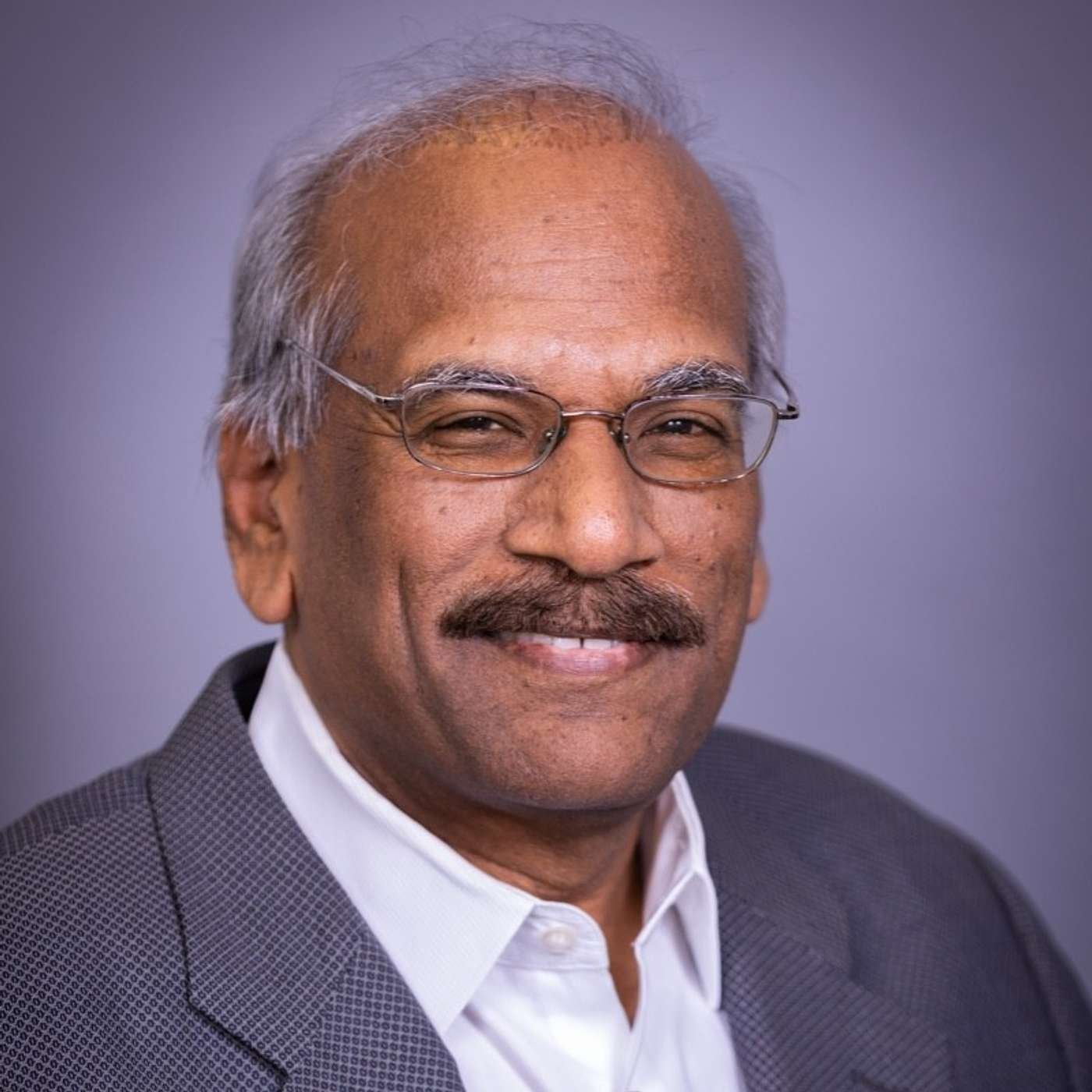
Welcome to The Clean Power Hour! On today’s show, we are joined by Mukesh Chatter, CEO of Alsym Energy – a company dedicated to providing next-generation clean energy storage solutions. Mukesh holds a Masters in Engineering from RPI (Rensselaer Polytechnic Institute) and is a serial tech entrepreneur and investor. His mission is to develop affordable, non-toxic, non-flammable BESS products for stationary and BEV storage industries.
Mukesh and his co-founders from MIT and RPI are preparing to launch their first commercial products in stationary storage and quickly scaling to the mobile EV market, with the goal of bringing affordable electricity to the less developed world. Join Tim Montague as he interviews Mukesh about his journey in the energy storage space, his mission to make clean energy accessible to everyone, and his plans for the future. Tune in today to The Clean Power Hour!
Key Takeaways
- What is Alsym Energy up to?
- Their alternative to Lithium Ion Battery
- How Alsym Energy plans to make their alternative cheaper than Lithium Ion
- How far in their development are Alsym Energy from developing a low-cost lithium-ion battery alternative
Connect with Tim
Clean Power Hour
Clean Power Hour on YouTube
Tim on Twitter
Tim on LinkedIn
Email tim@cleanpowerhour.com
Review Clean Power Hour on Apple Podcasts
The Clean Power Hour is produced by the Clean Power Consulting Group and created by Tim Montague. Contact us by email: CleanPowerHour@gmail.com
Corporate sponsors who share our mission to speed the energy transition are invited to check out https://www.cleanpowerhour.com/support/
The Clean Power Hour is brought to you by CPS America, maker of North America’s number one 3-phase string inverter, with over 6GW shipped in the US. With a focus on commercial and utility-scale solar and energy storage, the company partners with customers to provide unparalleled performance and service. The CPS America product lineup includes 3-phase string inverters from 25kW to 275kW, exceptional data communication and controls, and energy storage solutions designed for seamless integration with CPS America systems. Learn more at http://www.chintpowersystems.com
0:50
Want to make a difference? And we want to make sure that this electrification, we are switching over from fossil fuel to electrification. But in that process, we don't make a mistake of swapping one set of problem with other set of problems, which become very difficult to solve. So we hope to succeed, we want to succeed, we have taken the first step in going from a lab to the prototypes in our pilot plant for the stationary storage, and we'll develop the other two, that work is already in progress. There's one right behind another.
Tim Montague:
1:22
There's a growing ecosystem of alternatives to lithium ion storage. And this is wonderful. We love lithium ion batteries in the energy transition, but they have some fundamental problems, thermal runaway being, perhaps the biggest, there are supplant supply chain issues also. So that's a very good reason for our society to lean into alternatives. It's a both and is my mantra. I've had n zinc on the show with zinc technology. Today, we're exploring a manganese aqueous solution, battery technology. It's called Alsym Energy. And this will be diversifying all of the Eevee and stationary storage manufacturers, opportunities and alternatives. So I think this is a wonderful technology, but I'll let you decide. I would love to hear from our listeners about manganese, what do you think? And reach out to me? I'm Tim Montague. My guest today is Mukesh Chatter. He is the CEO and co founder of a company called Alsym energy. Welcome to the show. Mukesh
Mukesh Chatter:
2:34
thank you so much. Glad to be here.
Tim Montague:
2:36
I'm Tim Montague, your host Welcome to the Clean Power Hour, please check out all of our content at CleanPowerhour.com. Please give us a rating and a review that helps others find this content, so Mukesh. Tell us a little bit about yourself your background, how you got into energy storage and what you're up to at Alsym.
Mukesh Chatter:
2:52
Sure. I'm electrical engineer by training, worked on supercomputers in the telecom space, and then the number of startups. Some were successful, someone were not that our own investment arm and the number of investments as a reasonable size investor in startups. About 10 years ago, I lost my mother to late stage ovarian cancer and realised that no amount of money could save her life. And that's when he changed the direction and said being on the treadmill to just keep generating more wealth is not the right answer answer is to help at least a billion people around the world and improve their quality of life. So that's what my personal focuses. my wife and I decided to pick a problem that would that's going to help at least a billion people's in this case, we know that more than about 2 billion people around the world either don't have electricity or only get it part of the time, because grids are very expensive to build. And unfortunately, our grid storage including solar panels, and batteries, for example, together don't compete cannot compete with the grid cost. So we decided to take the challenge with others who are not willing to do and say that we are going to make a low cost battery, which is high performance lasts much longer, and is non flammable and non toxic, so that we could create this off grid power storage, which is going to be cost competitive to grid power storage, so that, you know 2.2 billion people at their homes can actually light things up at their home and come back from 19th century to the life of 21st century. That that was our mission. That's how we started the mission has expanded since then, as our technology became it became self evident that technology has applications going beyond that into shipping and EV space as well. That's kind of a brief.
Tim Montague:
4:39
Okay. And and so you you incubated the company at a academic institution or tell us a little more about the history of the company.
Mukesh Chatter:
4:50
Sure. So there are four co founders. In fact, my wife was 51 when we started and about three years ago, she decided she wanted to do other things, focused on another company. So it's Professor crippa, Varanasi at MIT professor Korotkov at RPI. Raul Mukherjee was our head of r&d and myself. So four of us. So once once my wife and I started the mission to say we got to build this technology, we were looking for the right people to who could help our cause a lot of people did not want to take this as a challenge because they thought it was too complicated. It was too difficult to meet. So and but then we met with Professor Varanasi, MIT and Professor Karateka. And one thing led to another they said, let's take this challenge. It's very important and yes, it's doable. That was about seven and a half years ago. And here we are actually, where we have product that's transitioning for stationary storage from lab into the prototyping plant. And we are very delighted that
Tim Montague:
5:56
in so the the initial market that you are targeting is exactly what
Mukesh Chatter:
6:02
I first market is stationary storage. Six months later, it's basically we will have a product that's transitioning, we'll be transitioning from lab going into prototyping plan for shipping, which is higher performance. And that that last piece, the third piece of the puzzle is for the Eevee, which is probably
Tim Montague:
6:22
when you say stationary, tell me more what commercial industrial or residential or, you know, just grid, there's many segments of that, of that market, so to speak,
Mukesh Chatter:
6:34
it's pretty much all of the above. And I'll tell you why my I don't want to sound like it's solution for everything, but since we are high performance and low cost, okay, what that allows us to do, and by the way, we can sustain the duration for a long time, our self discharge rate is very low, that even after 30 days, we are down only by 10%, which means we are retaining 90% of what was stored. So we have to be not only playing that niche market, but we also play across the board in the broader market with our cost basis is low, and it's non flammable. And as you know, I'm sure they've been the stationary storage, the only option today realistically is either people do lithium ion based stationary storage and the related issues that crop up flammability for example, what happened with the makeup backfire in California or in Victoria and Australia and other things. And there's also the need for significant paraphernalia around air conditioning and whole nine yards. So those are a set of issues that are generally well known on that side. But the alternatives are either it's high cost, high performance, flammable flammability integrated into it or it's low cost low low super low performance and non lithium ion based solution but there's nothing that bridges the two and that's the market where it's low cost high performance and get non flammable so that's the market we are going after in stationary storage both commercial industrial and potentially residential down the road
Tim Montague:
8:22
when you say low cost well how do you define low cost we will be
Mukesh Chatter:
8:26
put it this way we will be if we need to be we could be half the cost and we'll do just fine up existing lithium ion solutions
Tim Montague:
8:36
if that's your goal is to be half the cost of lithium ion
Mukesh Chatter:
8:40
yes, we could price things at half and we'll still be fine.
Tim Montague:
8:44
Okay, so let's talk about the technology what what exactly are you doing you have an aqueous solution what is an aqueous battery and and to the extent possible well how does it work?
Mukesh Chatter:
8:57
Sure. So listen our electrolyte is mainly water as opposed to primarily water as opposed to again lithium ion is the best standard to compare where it's largely organic electrical lights if you look by battery today from LG or Samsung or anybody they all use organic electrolyte those are the ones that are the flammable in addition to lithium and other things. We own our primary components primary electrolyte, primary elements solvent is water, which is a much cheaper non flammable by definition. And easy because it doesn't catch fire and things like those second thing is our one of our electrodes is primarily Manny's oxide operating word is primarily we don't use any lithium, we don't use any cobalt. Okay, that's important. So no issue related to beat human rights or the cobalt poisoning for example, that just happened in Victoria in Australia where two of the firefighters got cobalt poisoning. So we don't have neither of those. The other electrode is primarily metal oxide and electrolyte is aqueous. So again, manganese electrode, manganese oxide is available readily all over the world in abundance. So supply chain is not constrained by one or two countries it's very broadly available other metal oxide is equally broadly available, including in the United States. And water is available everywhere. So it meets all our key requirements. That's how we pick the material because we have the luxury unlike lithium ion batteries, there's chemistry is fixed. All you're doing is working on further and further enhancements going for higher and higher hanging fruit, as opposed to us who came up with a brand new chemistry doesn't exist in otherwise And our criteria for picking the material, they have to be low cost, they have to be readily available, they cannot be flammable and you cannot produce hydrogen fluoride or hydrochloric acid if it mixes with moisture to cause the issues. So those were the guiding principles. And that's how we approached it.
Tim Montague:
11:11
Yeah, I mean, I'm glad you mentioned availability, right, like, lithium is super abundant in the universe, it's the third most common element. We don't have enough lithium mines spooled up on Earth currently to meet demand. So that's a problem. So what is the situation with the, the, you know, the components of your battery? How scalable is the manufacturing,
Mukesh Chatter:
11:36
so those mines exist, and no, no material that we are using. And when if we put it this way, we will not be 5% of the overall market, even if we supply in hundreds of gigawatt hours. So that's a non issue. And while lithium is readily available, I think it's it's a misnomer to a degree or a very large degree. In fact, I think it's it's not something that people have clarified. Nobody wants a lithium mine in their neighbourhood within 20 mile range, the destruction, the poisoning that happens of the life form. And that's why South America, there's such a protest in some of the areas where the mines are, because the water is badly contaminated air is badly contaminated. And underground water gets impacted. So the question is, do I want it? I'm in Massachusetts, I can tell you that there's no way on earth the state of Massachusetts ever going to approve a lithium mine in the state? Is there lithium in Massachusetts, just like as you said, widely available? Sure. But Will anybody approve it? Chances are no. So it's going to bear is that going to land up largely in the poorer countries like South America in case of lithium? There is lithium in Nevada, for example, lithium and Carolinas? Yeah, what I'm hearing is that the permitting process from the start of the permitting process to end up production is attending your cycle. Yeah. And and the other danger, people may or may not appreciate it. In those 10 years as it starts and the production goes on. The alternative technologies like ours come along. And now you don't need those mines, then what happens? So now we need in the United States, right now we are less than 1% of lithium, cobalt and nickel, what we produce today, if we want it to go by inflation Reduction Act and get all of it made in North America, for example, we will need probably a couple of 100 times more mines than they exist today. And once those mines start the contamination and all the protection that has to happen, and a good in fact, we are in Woburn, Massachusetts, which is very famous for WR Grace and has a whole contamination that happened. But I can tell you that we certainly have a heightened, heightened sensitivity to what happens when you put up these contaminations that happen and how many years it takes and how many people with the cancers and other diseases. What happened is it's a well known history for Woburn, Massachusetts. So I think there's there are serious issues. So I don't think it's fair to say that lithium is abundant on Earth. So let's do it.
Tim Montague:
14:09
No, no, not at all. It's it's but but, but you are making some very, you know, broad claims, I have nothing against manganese, okay. I'm cool. With manganese, it's, it's very common. It's not apparently common in the US, though. So you know, what I want I want safer, healthier, I want a safer, healthier future for humanity. That is one of the missions I'm on with the show here. And so I love that, that you're taking an environmental justice stance and, you know, trying to look out for the little people and bringing electrification to rural parts of the world that don't have a grid electricity, that is a must do and solar and storage is clearly the way to do that. You need affordable storage. To have to keep the lights on, you know, when the sun goes down. And you're you're you're you're tackling that. Love it. So just real quickly, though, when you do this side by side, availability, scalability, you have no concern about manganese. Our ability to mined enough manganese is that what I'm hearing you say?
Mukesh Chatter:
15:25
Magnesium is very, very widely available. It's available in India. It's available in Australia. It's available in many other parts of the world. This manganese there is no shortage of and one thing I'm like, Look, we share our goals. I want to make sure that we one thing I want to point out we share our goals of as you said, you know, zero fossil fuel and electrification and I'm not saying lithium Ion Batteries should disappear, don't get me wrong, there's no way these things will coexist. All I'm saying is that if if all the 90 million vehicles that are sold every year, okay, and all the storage needs that exist, especially on stationary side market is exploding after what happened in Ukraine and Europeans are totally, they don't want to be dependent on any country for energy anymore. They want to build their own intermittent sources of power on the put the batteries, if all of that goes into production, the amount of lithium that's needed amount of cobalt that's needed and is going to be far, far more than what humanity can tolerate in terms of the toxicity. And otherwise,
Tim Montague:
16:36
what if you can make a manganese battery for half the cost of a lithium battery? That is going to be disruptive. And if I'm if I'm an automaker, I wouldn't consider using a lithium battery if I can find because the the battery is a major expense. And it's also a major part of the weight of the vehicle. But so on an energy density, you know, volume basis, all of this, you're checking a lot of boxes, why wouldn't you become a dominant technology? Why wouldn't you Eclipse lithium?
Mukesh Chatter:
17:10
Look, I mean, that's what we aspire to. Right? That's what we want to do want to make a difference. And we want to make sure that this electrification, we are switching over from fossil fuel to electrification. But in that process, we don't make a mistake of swapping one set of problems with other set of problems, which become very difficult to solve. So we hope to succeed, we want to succeed, we have taken the first step in going from our lab, to the prototypes, in our pilot plant for the stationary storage, and we'll develop the other two, their work is already in progress. They're one right behind another. And I think at the end of the day, no one technology is going to dominate. And I certainly would not bet against human ingenuity. absolutely convinced at this point, there's always going to be some garage somewhere working on yet another alternative that better than ours. So I think this is the better part of competitive process. And that's what that's what makes this country so unique and exciting. Actually,
Tim Montague:
18:59
everybody, thanks for listening to the Clean Power Hour or viewing it on YouTube, we do have a great YouTube channel. If you're not subscribed, please go to clean power dot group, and hit that YouTube icon and subscribe to our channel. Of course, you can find all of our content on your favourite audio platform as well. So please give us a rating and review back to the show. I'm a little confused. I just have to be honest, why you why you don't give me a direct answer, though to that question about disrupting the lithium market, you say you want to disrupt the market, you say you can create a product that is half the cost. And yet, you don't say a direct yes to well, yes, we're obviously going to replace lithium ion. So I just from a prosumer perspective, it seems like you're on that path. And that's and that's very intriguing and interesting. So what else? What else should we talk about? I don't know. You know, okay, stationary storage, and then mobile storage. There's, I mean, right now, the bulk of the batteries are going into mobile storage. And that's a challenge for the supply chain for stationary storage. Right, there are major supply chain pinch points, people, installers and developers are migrating from manufacturer to manufacturer right now, because of supply chain issues. Tesla's a great case in point, it's very hard to get mega packs. And so we're we're we're always casting about for alternatives, even though Tesla makes a very good product, not a perfect product. They are one of the one of the you know, one of the major players in commercial storage. And, but tell us more about what your vision is and how this you know, if you're, if you're in the market for storage, why should our listeners pay attention to Alsym
Mukesh Chatter:
21:05
shows? I also want to answer your previous question, my apologies if it came across like I wasn't adequately answered, and let me put it this way. We plan to be disruptive. We are in the process of developing product to be disruptive and we shall be disruptive. So maybe, alright, thank you. That's what we are going to do. That's what the team is here for. I just was taught when I was growing up not to blow my own horn from trying to be it's hard to sort of that cultural habit, if you will. But that's the fact. So as far as how it impacts look, Tesla is a great company. They've done a wonderful job single candidly, they've done something which others could not do. The fact is that the TVs existed. I mean, Jay Leno has a car, which has which runs actually on batteries, I think circa 1932, or something like that. TV other day. So look, EVs have existed, but the reason worldwide was went to gas based cars is because Electric City wasn't readily available all over the country at that time. So we are making a full circle, whether it was a 1930, or 19. Yes, we are number. So the point is, but what Tesla did single handedly make this technology viable and attractive to people that people are receptive to it. And they've done a wonderful job and you know, can, one can never take the credit away from them. It's like building a wonderful rocket that takes off going to the moon. But I believe because it's based on lithium batteries, the rocket is going in the wrong direction. And what we are doing is to put in the right direction, but the fact that somebody developed that technology, a car, which is more important, and has been able to have the reception, so I think that's awesome. It's clearly there's a shortage on the stationary storage over the shortage, actually on the automobile side as well, at this point. And so part of the challenge is going to be if one technology with one product with one set of materials, is deployed across the world, in every segment, from electric vehicles, to trucks, to stationary to all the ships, and you know, going even further home applications, others, I don't believe such a material exist on Earth. So there will be multiple technology, they will exist not to stress one particular material. So that's the first thing. Second thing is what we are doing internally, for each of the three segments, we are deliberately picking the materials so that we don't stress one particular material, there will be in fact a series of solutions, two or three solutions coming from us so that no one particular material isn't stressed. Yeah, I hope that I answered your question.
Tim Montague:
23:46
Well, yeah, I mean, diversifying the, the technology is a good thing, right? We want to we want to have more access to batteries, bottom line, and safer technology, great, healthier technology. Great. You know, I don't know what the issue is, what the environmental issues are with manganese mining. I, you know, I hope they're benign. Because we need a lot of storage clearly. And, and so, you know, mining, mining is just part and parcel, we need a lot of aluminium, we're already using a lot of aluminium and steel. Those are also big, big, big holes in the ground. So but you know, I had a question about form factor. And then to the extent possible, you know, a little more about the market. Are you are you a pouch or a cylinder or what is the form factor of the product?
Mukesh Chatter:
24:43
Our initial form factor is outsell we have it's about 320 centimetres square, I could actually show you, we do have, please, we don't want. So I could show you actually the what we are producing from prototyping plant. And this is a real cell actually. So this is what it looks like. It's exactly 320 centimetres square. And we have built five layers. So far, we'll be building about 28 to 30 layers. And our limitation today is not that we cannot build 30 layers. Our limitation is we don't have enough power coming into the building to be able to produce enough material. There's a massive shortage right now takes our local utility company anywhere between nine to 12 months to provide us additional power coming to the building. We have 1700 amps and what we need is 4000. That's our challenge.
Tim Montague:
25:39
Yeah. So your you mentioned in the pre show that you're taking pre orders, who are the who are the early adopting industries and what what what are the applications?
Mukesh Chatter:
25:51
Sure, so we have a pre order from an Indian automobile manufacturer, and which we have already announced three gigawatt hour per year for three years. We have a preorder from a shipping company in the sand Canyon and the synergy marine the sand Canyon is largest ship owner in Japan. And that's one gigawatt hour per year for three years again, these are the minimum volumes and we are engaged in conversation as we speak with a large stationary storage company to provide again in the gigawatt hour range for their storage.
Tim Montague:
26:31
Let me stop you for a second. So I understand you are equivalent to a CA TL though right you are making the cells you're not providing an end to end solution necessarily is that what I under And
Mukesh Chatter:
26:43
that's correct. That's correct. We we are working with a partner we are, we are we are discussing a partnership with a company that will take ourselves and create a package solution like a container, for example. So our first release of the product will have 2.4 megawatt hour per 40 foot container, the next release of the product, we expect to do about 4.8 megawatt hour per container, DC container, for example. So that's an the packaging and the management system, EMS and BMS that will be done by the partner initially, later on, we may develop our own but time will tell on that right now our focuses deliver battery in the commercial, the commercial scale
Tim Montague:
27:26
and duration wise it is this relatively short duration, right two to four hour duration. That's
Mukesh Chatter:
27:32
No, no, no, no, it could be week, I was mentioning earlier, our self discharge is less than 10%. What it means what over 30 days, what it means is that we can go for 30 days while retaining 90% of the capacity that exists. So yes, we are long duration as well, we are not assured we could we we could do two hours, we could do four hours, we could do 40 hours, and we could do 400 hours, basically about a month. I mean, lithium batteries, by the way, do lot, their self discharge is 10%. So lithium batteries could also provide known duration, the problem is that they're very expensive. That's the challenge.
Tim Montague:
28:10
More, right? I mean, if you just stack more of the physical asset, you can create more duration, so to speak, right?
Mukesh Chatter:
28:17
But not necessarily. So let's take a simple example, I got one kilowatt hour battery, okay, if I that one kilowatt hour battery still retains 900 Watt hour, at the end of a month. So that's, and then it can deliver at any rate you desire.
Tim Montague:
28:37
But by duration, I'm not referring to the discharge when when not in use, I'm referring to its ability to serve as a load for an extended period of time.
Mukesh Chatter:
28:45
Sure. So lithium battery could serve as a load for a long time, if I'm lighting up a 10 watt hour bulb, right on a one kilowatt hour battery, right a lithium battery,
Tim Montague:
28:55
there's a there's a difference between a Mega Pack, and a pumped hydro facility. pumped hydro is long duration, a Mega Pack is short duration, it is designed, it's engineered. It's cost effective for a two to four hour application. And, and so that is a that is a market segment. That is what I'm referring here to is the market segment.
Mukesh Chatter:
29:22
Short look at a cost issue, not the technical issues, I just want to make sure that that's I can use a makeup act today, if somebody wanted to do it for a longer duration and provide the challenges is a very expensive. So the point is very
Tim Montague:
29:36
large.
Mukesh Chatter:
29:38
Well, I mean it if you look at for example, form energy. And if you look at their 2.4 megawatt hour equalent battery, it will be several containers. Yes, one container. So in terms of large size, a lithium battery actually does far better. The problem is the cost. It's not the Demet blocks, volumetric density, lithium ion is the best, there's no question about it. If you look at from its ability to retain charge over a longer duration, it's great. Could it also support it? Smaller charge delivery? If somebody wanted it? Yes, it could do that. The biggest problem is the cost. Constant flammability. Yeah. So the niche people have been talking about long duration in a way. What that is, is how how does one deliver a very low rate of electric city over an extended period of time at a very low cost? That's really the long duration?
Tim Montague:
30:38
I'm not aware of a lot of applications for that we need. We need to power facilities, buildings, factories, homes, right? Overnight. Sure. Right. So that is charged up during the day discharge over the night. That's not That's not a long duration solution. That's a you you're using two to four hour technology, stacking it and, and meeting that need and that's fine. So So anyway, we need lots of storage. We just have five minutes left. So let's be selective about you know, how we wrap this up? What is this? What is the status of the company? How are you planning to scale? Is it is it is it a US only approach or are you going to prop up you know, giga factories in other places. Tell us a little bit about that big picture.
Mukesh Chatter:
31:38
So, a small company we will be partnering with a third party for manufacturing of the product. at a startup company, it's difficult for us to set up a 50 gigawatt hour plant. In fact, I'm not aware of any startup who's actually setting up 50 kilowatts, or the above plants. For automobile applications, we will be partnering with the auto partner to manufacture the batteries. For stationary and shipping application, we'll be working with third party contractors, third party contract manufacturer, which are beginning to come up with inflation Reduction Act that has done a wonderful job in terms of encouraging manufacturing in the United States, for sure. Right, so that's coming up. So we'll be partnering with one of those prospects to deliver the goods on that site. And by the way, we can repurpose the existing lithium ion plant as well for our technology. So that makes it somewhat easier. And so I think, so our plan is to do as much as we can in the United States, the plan is not to set up plants all over the world, that's the desire, or at least set it up in the countries where there's respect for it.
Tim Montague:
32:44
And how long do you think it'll be before? We're seeing your technology? Actually, you know, in the built environment,
Mukesh Chatter:
32:52
Asha, our plan is to be in high volume production by second half of 2025.
Tim Montague:
32:58
Okay, what else should our listeners know?
Mukesh Chatter:
33:02
These are exciting times we are living, right. There are a lot of challenges after what happened Ukraine war, the good thing it has done is it has spurred it has, it has activated this thing in the mind of people, this is a real problem we got to solve. And and I think to that extent, the awareness on a larger part of the public is very, very high. So I'm thrilled about that. The what we are short off is typically the solutions. And we are clearly step in the right direction. But it will also spur more innovation at the end of the day. Anybody who's trying to reduce the fossil fuel and replace it with electrification? We are collaborators to that extent as far as the larger planet goats. Right. So from my app, so my message is basically at the end of the day, I guess we will be economically successful, I'm very confident of that. But at the same time, the larger goal is not just to be economically successful. We started out we're trying to help billion people will definitely light up those homes, but also we got to reduce the carbon emission. So So I think we, I think we are we are on our way, and we'll continue to do that.
Tim Montague:
34:20
Yeah, I mean, it's, it's interesting. We've actually been in the energy transition now the clean energy transition for 50 years. It's just not until really 2010 or so that the cost technology curve, really hit that inflection point, and now it's going mainstream. And and it's just a question of, can we make the transition fast enough now to you know, to prevent runaway climate chaos? So how can our listeners find you Mukesh
Mukesh Chatter:
34:54
best thing will be to right now, we are so small, and we have limited resources, best thing is to come in to us through the internet, we have a form on our website, and they could definitely reach out. And we our Head of Marketing MetroWest will make sure that he responds, we would love to hear from prospective partners or customers and work with them.
Tim Montague:
35:18
Yeah, the website is alsym.com And you can find all of our content at cleanpowerhour.com We have a great YouTube channel, please subscribe to the channel just hit the YouTube icon that will take you right to the YouTube page. And if you're listening on audio, we're on all the audio platforms, please give us a rating and a review on Apple or Spotify. And especially a review would be very helpful. So thank you all for listening. I look forward to seeing all sim flourish and bringing some significant competition to the lithium ion market really excited for this and thank you so much, because Chad our CEO of Alsym energy. Thank you.
Mukesh Chatter:
35:59
Thank you so much them greatly appreciate the opportunity and what you're doing over the clean energy. So thank you so much.
Tim Montague:
36:06
I'm Tim Montague. Let's grow solar and storage