Behind the meter, the wind has some vexing characteristics that until now have kept it largely off the playing field for large facility operators. One Energy has seemingly cracked the code by offering a bespoke, white-glove approach. Their 1.5 MW turbines produce up to 5 million kWh per year of on-site Clean energy (note the high capacity factor). They install, own, and operate turbines and sell a PPA to their industrial customers.
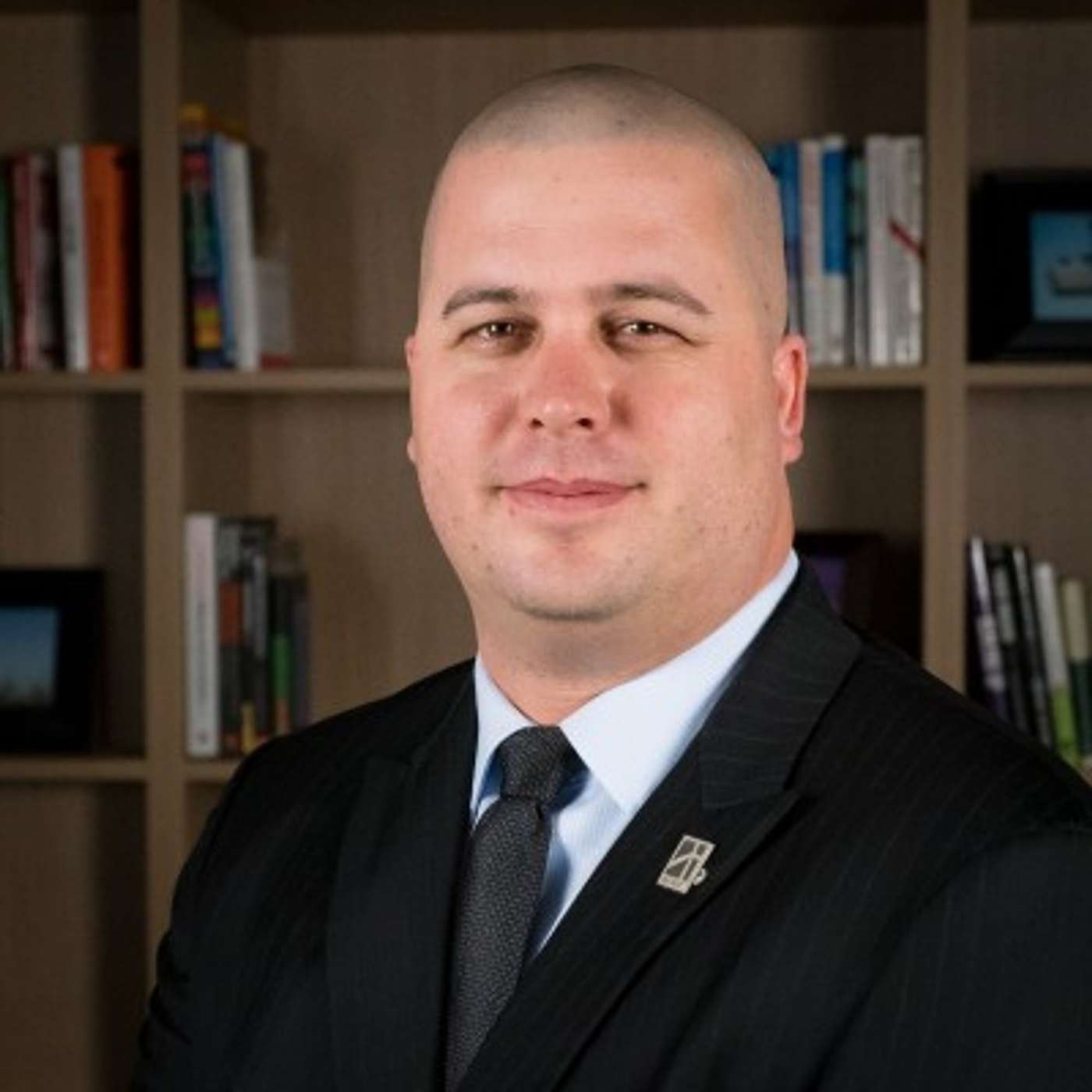
My guest today is Jereme Kent, founder, and CEO of One Energy. Jereme is a wind industry veteran of 16 years.
One Energy is an industrial power company that helps large energy users build modern, tailored, on-site power grids for their facilities. Jereme Kent is the founder and Chief Executive Officer of One Energy Enterprises Inc. Prior to founding One Energy, Jereme ran construction of several of the world’s largest wind projects for utility-scale construction firms including RMT, M.A. Mortensen, and D.H. Blattner, and has overseen more than half a billion dollars in wind turbine construction projects.
In this episode of the Clean Power Hour, he joins Tim Montague to discuss whether it is possible to break the 2-cent PPA barrier with small wind, the pros and cons of behind-the-meter wind vs behind the meter solar, and much more.
Key Takeaways
- How Jereme got into renewable energy?
- What is One Energy and who are its clients?
- The pros and cons of behind-the-meter wind vs behind the meter solar
- Is it possible to break the 2-cent PPA barrier with small wind?
- The process and the consideration that you and your customers
- The technology One Energy uses to avoid ice build-up on solar blades
- Is One energy exploring the use of a microgrid approach when you can operate in off-grid mode?
- What one energy is looking to do on the Power Infrastructure side?
Connect with Tim
Clean Power Hour
Clean Power Hour on YouTube
Tim on Twitter
Tim on LinkedIn
Email tim@cleanpowerhour.com
Review Clean Power Hour on Apple Podcasts
The Clean Power Hour is produced by the Clean Power Consulting Group and created by Tim Montague. Contact us by email: CleanPowerHour@gmail.com
Corporate sponsors who share our mission to speed the energy transition are invited to check out https://www.cleanpowerhour.com/support/
The Clean Power Hour is brought to you by CPS America, maker of North America’s number one 3-phase string inverter, with over 6GW shipped in the US. With a focus on commercial and utility-scale solar and energy storage, the company partners with customers to provide unparalleled performance and service. The CPS America product lineup includes 3-phase string inverters from 25kW to 275kW, exceptional data communication and controls, and energy storage solutions designed for seamless integration with CPS America systems. Learn more at http://www.chintpowersystems.com
0:50
And so what we're seeing is every customer we ever talked to who maybe the economics or marginal, maybe they weren't motivated before, is now calling us back up saying, Hey, you remember that report from two or three years ago from that conversation we had? Can you still do that? And so we're seeing, you know, people come out of the woodwork that we haven't talked to in years, saying, you know, holy crap, we just got screwed by the grid. We just had an OP X, you know, go through the roof, we can't do anything about it. Would this have happened if we had your wind turbines.
Tim Montague:
1:16
The Clean Power Hour is brought to you by the Clean Power Consulting Group, I'm Tim Montague, your host, check out all of our content at Cleanpowerhour.com. Please give us a rating and review on Apple and Spotify that helps others find this content. And I know you want that we want to grow the energy transition as quickly as possible. Today on the Clean Power Hour, my guest is Jereme Kent. He is the founder and CEO of One Energy, a behind the metre, wind and other services provider. Welcome to the show, Jereme. Thanks, Tim. It's been a journey getting you here. But I am very happy to have you here. And I would love for you to give our listeners a little background on yourself. How did you come to the clean energy industry and come to One Energy?
Jereme Kent:
2:06
Well, thanks, Tim. You know, nothing like a broad open question that gets things started. You know, I, like many others, probably got into the clean energy industry by accident. Back when I was wrapping up my time at University of Michigan, I started applying to jobs. In the middle of one of the interviews, you know, it wasn't going that well, frankly. I kind of was like, Okay, I'm done with this company, and whatever. And the recruiter then goes well, okay, just three more questions. And I was like, Great, thank you. And she goes, Are you willing to work long hours? And I'm like, Yes. And she goes, Are you willing to, you know, to relocate? And I said, Absolutely. She goes, Are you willing to climb a 300 foot pole on the side of the cliff, mainly paused and responded and went, I actually am willing to climb a 300 foot pole on the side of a cliff. But what are you guys doing? And she said, Well, we build wind turbines. And I had no idea I thought they were heavy civil contractor. I then I hung up the phone and immediately asked Jeeves back in the day what a wind turbine was. Because I didn't realise that there were, you know, large megawatt scale turbans. And next thing I knew I was working for one of the largest contractors, for wind in the country in the world at the time, did my time, you know, moving around with different contractors, different sites, different states, changing locations every three to five months. And ultimately, at some point, I decided to start this company and figure out how to take the skills I had learned there and apply it to helping large industrials take control of their own grid. So kind of a convoluted way of getting here. But we ended up where we are today.
Tim Montague:
3:34
And what year wasn't that you got into when
Jereme Kent:
3:37
2006. So that was kind of right when it was going right before the big boom and eight, nine.
Tim Montague:
3:43
Yeah, that boom, hit us here in Illinois, we got our first RPS and oh eight. And I thought I'd worked in the wind industry before I worked in solar, because that's what was visible, we saw large wind farms coming in come in a way to say 12, the first wave so to speak. So wind was the earliest adopter for renewables on mass here in North America. And now solar is nipping at its heels from a from a cost perspective. So we see solar growing at a equal pace. And there'll be going head to head for the foreseeable future, really, because we need lots of renewables, wind and solar complement each other very nicely. If you don't know this, and you're listening, the wind blows more at night. And it also blows more in the winter, times when there's less solar energy or no solar energy. So very complementary technologies. But what is One Energy Jereme and who are your customers?
Jereme Kent:
4:42
You said it right, Tim, that the industry back in six was a very interesting time because all of a sudden, you're building these mega machines that nobody ever saw before. And you know, I got into the just because of how big and cool these things were. And they never, you know, eventually realised what they were doing to transform the grid, but they're just, you know, machines on the scale that you don't see anywhere. And that's pretty cool to do to One Energy is an industrial service company, we call ourselves an industrial power company. What we do is we do full turnkey facilities behind the metre, so on on site behind the metre directly power in a customer's facility, but we're best known for is what we call wind for industry. The, you know, the installation of multi megawatt utility scale wind turbines to directly power large factories. Over time that's expanded to include other services behind the metre, from energy consulting to what we call manage high voltage, we're actually owning and operating power systems. But our goal is to be the one call, you know, what you wish to utility actually could be but never actually is for large industrial facilities.
Tim Montague:
5:44
And if I'm a facility owner, and I've faced this challenge myself as a seller Developer and installer. You know, a factory approached me four years ago in Northern Illinois and said, Hey, we want to behind the metre wind turbine. So I quickly did some homework. And you know, we had a, a kind of mantra at Continental, the UPC that I used to work for that. Small wind was just very challenging economically. But not only that, it's hard to find providers of the technology of the turbans, and then companies like yours that will actually do the soup to nuts analysis and installation. So paint a picture for us, if you're an industrial facility owner, what are the pros and cons of behind the metre wind? Versus behind the metre solar? And then are you also playing in the wind and storage space?
Jereme Kent:
6:49
Thank you describe it? Well, there aren't. I mean, there are almost no other companies besides us, who will do turnkey behind the metre wind at this scale. The big players, the guys who are used to building big wind farms are very good at how do you show up and build 200 turbines, we used to have a running joke on the big sites that the first 10 turbines don't count because we would lose a bunch of money on them. And then we make a bunch of money for the next, you know, 50 100 200 turbines, when your your site only has one, two or three turbans, you can't lose money on the first 10. And so we had to rethink how we mobilise the site, how we build a project, how we design a project, we had to rethink how we financed projects, we had to rethink tax equity. There are tremendous barriers to entry to figure out how to efficiently build 123 turbines. As we worked through those, we became the market leader in that and we figured out how to rinse and repeat and make that programmatic. We brought the installed cost of behind the metre when down almost 50% from you know, roughly 4 million per megawatt to sub 2 million per megawatt. So we're able to do behind the metre wind at sub 2 million per megawatt now consistently, what we have found is that when wind works, wind tends to be the lowest lifecycle cost of energy for our customers. So we get the lowest long term fixed rate, and the most efficient use of land. There are sites, you know, next to airports and things where wind just doesn't work. There are sites where solar doesn't work due to land constraints. But you know, in a open field that's appropriately cited when tends to do better on just a per kilowatt hour basis, which is tends to drive the customer decision.
Tim Montague:
8:23
Well, that's fascinating, because I'm able to offer customers in Illinois, a sub two cent PPA for industrial applications now. And we have special incentives for renewable energy in Illinois, as you likely know, which is a game changer. But can you truly break that two cent PPA barrier with with small wind?
Jereme Kent:
8:47
I don't know that I've broken that barrier at that price in Illinois, but I've gotten to that price in Texas, in the white right wind regime, it all depends where you are. So obviously Illinois, various Illinois also has some very attractive subsidies that exist now that didn't last time we looked there. But you know, we are playing in that, you know, very low single digit type rate. So, you know, we have PPAs in the four cent to six cent range. And that's before some of the kind of juicy or incentives that are recently coming out with, obviously Illinois energy transition Act, which did put that state back on the map for a major place to go. And then looking at, you know, what's coming out with the IRA and some of those, those 10% bonuses could make some sites very interesting.
Tim Montague:
9:28
Yeah, I think you're referring to Seija the climate and equitable JOBS Act of 2021. And that was that is fueling wave two of what was the initial what was that called? It was it was a cousin to Seija. I'm forgetting the acronym, but it was it was a this was a bill passed in, in 2016. And then came into force in 2017. Illinois has a good RPS, we have a 25% by 2025, where we had, but it was broken, it was not achieving its goals and that is you know, I like to say in my trainings and in my podcasts that a an RPS is a strong foundation, you really want an RPS to drive the adoption of renewables in 30 Plus states now have RPS is and and those RPS is are getting more and more ambitious. You see very ambitious ones in California and Massachusetts and New York and New Jersey, some of the you know the leading states and now in Illinois. So, but let's circle back to this to this this use case okay for industrial applications. The nice thing is that many, many industrial facilities are sited in rural or semi rural areas, so they have ground around them. Many times a factory will have Extra ground purchase, because they want to have room for growth and expansion. That's, you know, the the only question is what are they willing to give up then. But of course, with wind, you it has a relatively small physical footprint, which is a pro, definitely at a Delta from solar, solar is relatively land hungry for behind the metre, at the in the greater scheme of things, we only need one to 2% of the landscape to completely green the grid. And so we have plenty of land in the greater scheme. But it's a question of getting a a Energy Facility sited near the the load near the factory or other application so to speak. What is the process that you and your customers go through? How long does it take soup to nuts? And what are the considerations that facility owners need to be thinking of?
Jereme Kent:
11:52
Yeah, I think you hit the nail on the head, Tim, and that it's, you have to find the right industrial site. Unfortunately, most industrials whether that's for their buffer for their own NIMBY issues for their own hazardous issues, have created a large buffer around them. And then how do you play in that buffer? You know, there's four primary screening factors that we have to look at. We look at proximity to airports, because there are federal and state rules that govern how close we can be to airports with, you know, big, tall, spinny things. We look at the power price in the area to figure out if we're gonna be able to be market competitive, we look at available land. And then we also go look at wind resource and energy usage to make sure that they actually can match up right we we don't do well, at small scale, the smallest turbine we instal is a one and a half megawatt. And that's about to be even bigger than that, which means we have to have an industrial facility using you know, at least 5 million kilowatt hours a year. And then you also run into some interesting issues that are challenges for both wind and solar, and more so for solar than wind. But, you know, if you want to take a factory to 100%, renewable, you, by definition have to be producing significantly more than their average consumption during your peaks. So a five megawatt factory needs 10 to 15 megawatts of wind, to get to net zero, it needs even more of that than solar. And so all of a sudden, you have power systems that are bigger than what the factory was originally intended to have you. And you end up in this issue where you sometimes have to do significant upgrades to a factory, just so that they can embrace the renewable energy goals, all of which are challenges and all affect how it ties into the grid. You know, fortunately, as you know, behind the metre systems do far better on interconnection times and what you're seeing in miso and PJM. And, you know, the multi year stuff that utility scale developers have to go through, we can go from handshake with the customer, to starting construction in as little as 90 days. And as long as you know, two to three years, depending on their decision process and the site and what rules we are, I've got a couple of projects that are in unzoned townships, we can build, you know, multi megawatt wind turbines with literally a driveway permit and a utility application. I've got projects, you know, inside city limits that go through, you know, multi month long processes to get variances and change zoning ordinances. And everything in between
Tim Montague:
14:08
how big is a 1.5 megawatt turbine 45 feet to the tip
Jereme Kent:
14:12
of the top blade. So typically, that would be an 80 metre height turbine, roughly 260 feet and a 87 metre diameter rotor, which puts you about 405 feet. So in scale that is a football field spinning on top of a 27 storey building. And the problem is we don't get smaller than that. If you have a typical warehouse or a typical kind of small industrial facility, distribution centres, the small manufacturing facility, typically those don't use enough energy, we have to find the big facilities that are you know, the real energy hogs.
Tim Montague:
14:43
And you suggested that a 1.5 megawatt turbine could produce 5 million kWh, I did some quick math, and that translates into over 3000 kWh per kW up. Is that Is that typical of your projects that you're getting that much? per megawatt,
Jereme Kent:
15:02
we have capacity factors ranging from about 27% to about 37%. You know, we end in some places does get up to about 45% capacity factors. We haven't been that fortunate yet in terms of a site that when rich but we will do solid, mid to high 30s 45
Tim Montague:
15:18
Sounds like offshore.
Jereme Kent:
15:21
Or it sounds like some of the kind of the overdesigned turbines with these super big rotors are putting up, you know, in Iowa in places where they're pushing the limits of technology right now.
Tim Montague:
15:28
Yeah, I mean, a small turbine for utility scale would be two and a half megawatts that was kind of the old school, right? And now they're five, five to 15.
Jereme Kent:
15:38
Maybe I'll stop you there and say that I don't think anybody's installing, you know, five to 15 is major projects yet. You're seeing that three and a half to four and a half classes kind of still the big projects onshore, offshore. Obviously they're getting up to those 15 megawatts, but I have not seen many projects in the US above a four and a half megawatt platform or like a 5.2. The bigger machines are the ones that you're seeing go offshore that are hitting incredible numbers, like, you know, you're 13 and 14 megawatts.
Tim Montague:
16:02
I saw a Norwegian company called worldwide wind has developed a 40 megawatt turbine concept. It's a vertical axis. So different than what we're talking about here, which is horizontal axis, I believe, right? Your your wind turbines are look like traditional windmills, right?
Jereme Kent:
16:24
Horizontal Axis three bladed machine. And those really are at this scale, by far the most cost effective solution. You know, there's some vertical axis concepts offshore. That makes sense. I haven't really seen one onshore, that makes sense. But it really is a game of how much wind can you capture. And about the most one you can capture is a perpendicular rotating circle to lower the wind direction, which is why you see that horizontal axis type structure.
Tim Montague:
16:49
Yeah. And so you have a factory, these are typically, you know, 30 feet tall structures. And then then they can be, you know, 10 plus acres, large rooftops, very large facilities, million plus square feet, under roof, and running, you know, many times 24/7. But what what are the considerations when citing because, of course, the the wind is going to flow over the building, and pose a challenge to a wind turbine that's next door to the facility? How close? Or far do you have to put these turbines from the facility?
Jereme Kent:
17:32
Yeah, so one of the things that he spent a bunch of r&d effort in is, you know, understanding how wind resource looks and acts when you're close to large industrial structures, right. That's not what traditional wind farms are built around, they were in the middle of cornfields. You know, there are some things that are there are pros, and some things that are cons. I mean, ironically, that 10 acre roof is usually a very smooth roof, which is a very low friction roof, which can create some interesting effects, complex shapes and weird things can cause some weird turbulent effects. And so, you know, we've we've had some turbans significantly overperforming, that we had to go back and understand why and some that underperformed, all based on those concepts. Ultimately, you know, we we stay far enough away that, you know, turbans is plenty of clearzone. In case anything bad ever does happen, noting that, you know, it's less likely to happen to a wind turbine than the building itself. But it's still far, you know, a good prudent step to be a turbine, tip hideaway, but you know, I've got turbines that are, you know, a tip height plus one foot away from industrial facilities, our office that I'm sitting in right now is 620 feet away from a wind turbine. And so you know, we've shown you can get very aggressive in siding if you're responsible. And if you do the right things to deal with, you know, when ice builds up, right, so I mean, I've got one turbine that is, you know, 300 feet away from a parking lot that can hold 300 cars. And so we have to make sure that when we have an icing event, and everything around us, the building the parking lot in the winter, when it's covered, nice, we don't throw ice off of the blades. And so we've had to do a lot of things to really enhance that safety, to make sure that we're running the best quality turbans possible right now,
Tim Montague:
19:06
everybody, thanks for listening to the Clean Power Hour or viewing it on YouTube, we do have a great YouTube channel. If you're not subscribed, please go to clean power dot group, and hit that YouTube icon and subscribe to our channel. Of course, you can find all of our content on your favourite audio platform as well. So please give us a rating and review back to the show. And what is the technology to avoid ice buildup on blades? What are you doing there?
Jereme Kent:
19:33
So there's a couple of different things that the turbine has tried to detect it themselves based on looking at power curve, differentiation, what they should be making versus what they are. We also actually have sensors that literally detect when ice builds up on the sensor just like an aeroplane would, and can tell us that there's an alert and a problem going on. So we can stop the turbines. And then we use everything from drones to binoculars to figure out how to turn that turbine back on at the right time and in the right direction to have it not be an issue.
Tim Montague:
19:57
And then, you know, you can weatherize these things right with with heaters in the blades. There were some failures of wind turbines in Texas when the when the big cold snap happened a couple of years ago. So it's you know, the technology is a wonderful thing when you apply it right and you can do a lot it just gets a little more expensive to include those bells and whistles but I believe you can you can make these turbans pretty weatherproof no matter what climate right.
Jereme Kent:
20:30
Yeah, so you can definitely invest in technologies designed for super cold weather. I mean, they have wind turbines running Antarctica you can get very aggressive. In general, nothing's going to stop ice from building up during a heavy ice storm. But you can have heaters in the blades that help get that ice off much faster. And so there are things you can do to bring that turbine back into service much faster. I'm You have to see the tech and put enough heat up quick enough to overcome the one inch icestorm. But you can definitely get to where those turbines are more resilient. And there's a lot of places in the country where they are, you know, the the real problem that you have in Texas is that that was not a design spec for any of the technology. Right? The reason you had natural gas pump stations and coal piles and everything else freezing up is because nobody, nobody designed for that. And as we see more and more, you know, extreme events with climate change, what used to be a two ice day a year area now maybe a 10 or 20, ice day a year area. And so all of the technologies are seeing themselves have to go adapt to that.
Tim Montague:
21:23
And what is the risk reception you're getting right now from the market? You were saying that you're going out to the breadbasket of America right now. And that makes sense, right? There are a lot of manufacturing facilities here in the Midwest, what what are owners saying and, and, you know, because here I am a behind the metre solar developer, I also do community solar. But I have to say the reception is still pretty chilly in the Midwest. No pun intended, because people don't know what solar is. They don't realise that it is mature technology. And they just, they just don't know what it is. So I have to do a lot of education. And then obviously, some percentage are engaging in the market, the early adopters are the ones that are going to benefit the most, because the incentives are sweeter now than they will be in five years. But how is it going from the behind the metre wind side of things?
Jereme Kent:
22:26
So I think you're right, Tim, that there is kind of the education hurdle. But what we're seeing lately is that with recent events on power pricing, where you're seeing, in some cases, utility, power pricing, going up by 40%, in one year, with natural gas pricing, every customer is freaking out. And so what we're seeing is every customer we ever talked to who maybe the economics or marginal, maybe they weren't motivated before, is now calling us back up saying, Hey, you remember that report from two or three years ago from that conversation we had? Can you still do that. And so we're seeing, you know, people come out of the woodwork that we haven't talked to in years, saying, you know, holy crap, we just got screwed by the grid, we just had an OP X, you know, go through the roof, we can't do anything about it. Would this have happened if we had your wind turbines. And, you know, again, our rates are 20 year fixed flat rates. So when we start a project, that customer knows the price and power for 20 years, I mean, I have one customer who has a rate that actually goes down 1% per year. So from the day we started until the date, 20 years, you know, is passed, every year, the price of power off of that wind turbine goes down by 1%. And so we're seeing customers realise the value of that, while also, you know, seeing the value of, you know, being clean and renewable. But you know, it has to be an economic decision first. And right now, the economics are very much in favour of realising the power grid suck, the utilities suck. And the best thing you can do is take back your own power grid.
Tim Montague:
24:42
Yeah, we were talking in the pre show about how difficult it can be to get full cooperation of the utility. They have their ways of slowing things down and making things more expensive than they really need to be. And we all lose in the long run. We're making the energy transition more slowly. As a result, consumers are paying more for energy than they need to or should. And so there is a phenomenon of of taking your facility off grid. And defecting from the grid with wind, solar and batteries. Wind and solar are both intermittent. So you have to have some kind of storage or generator. Batteries are kind of the market leader right now. But there's a lot of storage technologies, some that have been around for a long time, like pumped hydro, and some that are new, like this blossoming of thermal storage that I'm reporting on here on the Clean Power Hour. Companies like Rondo are fascinating, making clean heat with renewable energy, storing it in hot bricks, and then providing it on demand whenever you need it. And that's long term storage. So how much traction Are you getting? And if you're a facility owner, what are the what are the three key criteria you've mentioned? Do you want a big load? You know, several million kWh of load per year? Because that's the bottom line is you need a 1.5 megawatt turbine turbine load right. You need you need someplace to put it. But otherwise, you know when you think about the Upper Midwest here, Iowa, Missouri, many Minnesota, Wisconsin, Illinois Ohio, Indiana, Michigan. What else should facility owners think about? And, you know, ask themselves?
Jereme Kent:
26:53
Yeah, it really is, you know, do you have a decent chunk of land around you? It's hard to help the factory in downtown Columbus, right? Do you have land and are you at least three miles away from an airport. And that's not an absolute guarantee it works. But that's the biggest filter criteria, in terms of filtering it out. In terms of, you know, the states, you listed, almost all those states are in what's known as the wind belt, right? The historic wind belt where you see the wind turbines. So in general, if you see wind turbine somewhere, you know, within an hour of where you are, there's probably enough wind, alright, there's a whole bunch more we do to make sure of that. But most of those states are the states where wind has been built out in PJM, and miso. So, you know, we're definitely seeing that there's a huge push to figure out what you can do right now to get control, right, because the alternative is, you just become a complete market taker, like you've been for the last, you know, 80 or 100 years. And so, you know, take any large factory, who, you know, has as part of a multinational multibillion dollar company, right, and they have, you know, internal purchasing teams, they optimise everything they do, they can exercise, purchasing strategies, and then they come to energy or especially electricity. And they have no choice, they have to work with who they're working with. They have to deal with their rate cases, they have to deal with the monopoly. And even in deregulated states and are able to shop for a portion of it. Utilities are systematically shifting away to get higher demand costs. And so the reality is, it's war. And we're, we're seeing companies wake up to the fact that it is war, trying to figure out what to do, you know, to go to the point, you're talking about storage. Storage, obviously, is the missing link, it's very difficult to make a pencil at the scale we're talking about, you know, when you talk about an 810 megawatt load, that needs to be to have, you know, two days worth of coverage for a true downside event to be true off grid. That's a several 100 megawatt hour battery or storage system. And that's just not easy to do these days. And it's not cost effective. What we are seeing those customers saying, Okay, how do I get 90%? Off Grid? Right? How do I take a big step in the right direction, and de risk this, and then figure out how to do the rest later. And, you know, I think if every industrial facility figured out how to do 50 to 75% of their own stuff, and was able to use the grid, the balance in the middle, you know, that becomes a very interesting power grid where utilities have far less control than they have today.
Tim Montague:
29:07
Have you explored using a micro grid approach, though, where majority of the time when the wind is blowing, you're operating in off grid mode, and then tying into the grid when you need that grid power that would allow you to avoid some of the headaches with interconnection. And this is a model that I've just started to see some companies in the storage industry apply as a way around the burdensome interconnection rules and processes.
Jereme Kent:
29:39
So we've never had a problem with interconnection. Just candidly, Tim, you know, we've dealt with utilities that have been, you know, called hostile by others. But, you know, we have the engineering teams and house we're on the committee's helping right 1547 and other standards and state level reviews of that we haven't had a hard time with the interconnection, what we have seen is that it's very difficult if economics is your main driver, to make any sort of off grid solution works, it's work, it's far easier to parallel, just because the way a load for a factory ramps up and down and the way that any sort of generator wind or solar included, ramps up and down, becomes very hard to sink. It's also very, very difficult at that scale at those loads, to sync back up to the grid, it's very easily to be running in parallel and to isolate, it's very difficult to sync back up to the grid and do that in a way that doesn't cause issues when you come back in. Just because those facilities are big enough, they affect the grid. And so there's a whole bunch of challenges with that. You know, we absolutely think that the next 10 or 20 years, that's going to be getting better and easier to do. But it's hard to do for a 1020 or 30 megawatt facility right now. And it's definitely not the most economic answer, which is usually to run in parallel with the grid.
Tim Montague:
30:52
Okay. And it sounds like the PPA is your, your main model. So that's third party ownership. So there's relatively little upfront costs to the owner. Is that accurate?
Jereme Kent:
31:05
Yeah. So we, the real magic was figuring out how to bring financing to this industry, right how to layer in the the tax equity, the long term debt, the right equity structure, so that we could offer a 20 year fixed rate PPA. And so once we figured out how to do that the proposition becomes a whole lot easier. There's no big upfront capital expenditure for a factory, it's, we're gonna go spend 510 15 million on your factory and you only have to pay us when we start producing power, all the rest of the risk is transferred to us. And we're usually very candid about that we tell facilities look, if you want us to build it for you, and you want to cut me a check, here's the price. I'm going to charge my Sell the same price and they'll finance it. But most of the time, it doesn't make sense for these companies to own power generation assets. It doesn't fit into their capital model. It's not what they do affects their, their, their pro forma on the way their balance sheet looks. And so it's far easier for us to own it take all that risk, and they just have a 20 year fixed rate taker pay agreement.
Tim Montague:
32:02
Well said well said and I wholeheartedly agree, I think the third party ownership model for renewable energy makes a lot of sense for many types of offtakers, including industrial offtakers, but also municipalities and schools and colleges and hospitals. What about a V PPA virtual PPA? Have you ever done a virtual project?
Jereme Kent:
32:22
So we tend to refer to those as tridion hog futures, we aren't really sure what it does. And so you know, we we are firm believers that the problem with the vppa is that the law could change tomorrow, and it could make that entire VBA worthless. So you know, I always say that VP pas have a John Oliver problem. So John Oliver, obviously, with Last Week Tonight, when he does shows, will sit there and make fun of obvious things that are just silly about where the markets got to. And VPP is go down that path. So I love getting a group of high school kids together, or intermediate school kids together and say, look, here's the deal, I want to be a really clean person, I want to be the cleanest, lowest carbon footprint person out there. But I don't really like want to stop driving my diesel truck, and I kind of want to light stuff on fire when I feel like it. And I don't actually feel like using you know, all the good stuff, but I'm gonna, I'm gonna pay you, Tim, to be clean for me. So I'm going to pay you to ride your bicycle everywhere, you're going to have no carbon footprint, I'm just going to take credit for that. So I'm going to still be driving my diesel trucks doing co2 out the back, but I'm clean now, because I have a vppa with you that says I'm clean. And that doesn't pass the smell test in a lot of cases. You know, it's it's what most companies are done right 99% of claims out there are based on off site VAs saying that they're clean. But I think that that's gonna be a problem in the future, when we start talking about the fact that some factories are still very dirty. data centres are still very dirty. They're just saying they're clean. And you know, the evidence of this that shows it's not crazy. If you look at the few laws that exist in the United States, that put a price on carbon right now. It's laws like the California low carbon fuel standard. And that law says that if you want to count your liquid fuels not made in California, as having clean energy, that clean energy has to be produced inside the fence line, and physically delivered to your factory. So if you're a renewable diesel manufacturer, you can't have a vppa outside of California, it has to be inside the footprint. And those are the people actually putting $1 value on carbon score. And so I think as we see more regulation and more states doing LCFS, and you know, more cap and trade style things coming in at the state or federal level, you're going to start seeing a whole lot stricter rules about what really counts. Is your Ohio factory really cleaner? Because you bought some credits in Texas? I don't know, I think that's a tough sell when you actually start looking at it. I acknowledge that's not the normal opinion in this industry. Tim?
Tim Montague:
34:50
Well, I don't know that there is a norm. I mean, certainly your point is well taken about the popularity of EPA is I just think, okay, there's gonna be facilities that are in too dense and urban area, for example, that would love to buy clean wind energy, but once a site the turbine 10 miles away. And that is complicated. I think from an interconnection perspective, which could be a deal killer. I don't know, I've never tried to do this with behind, you know, with a small scale solar facility, we're always trying to do rooftop or next door ground mount right. Either either the facility has ground or an immediately adjacent parcel has ground that they're willing to lease to the project which might pass muster with utility for, quote, unquote, behind the metre. Well, what else should we talk about? With regards to the behind the metre wind industry? You mentioned? power infrastructure is also part of your playbook. Now. What are you doing on the power infrastructure side? And And yeah, if there's other things that we should let our listeners know about, I'm all ears.
Jereme Kent:
36:00
I think you hit the nail on the head, Tim, and that it's, it is easily technical, technically feasible to build that wind turbine 10 miles away and move the power over to that factory. But most states have laws that say you can't do that, because that's the business of utility. So the question is, why did those laws exist? Right? What are they actually protecting? I think you're gonna see a big change in those laws coming. I think the place that you're also going to see a big change is what your is what you were just talking about with our energy intensive infrastructure. And with that, what we're doing is actually upgrading the power systems of these factories. Most of these power systems were built when the factory was originally built 2040 50 Sometimes 100 years ago, and they just aren't designed to be able to handle large amounts of renewables have the automation have the protection, they are ready to take Wind and Solar Powering through their system to back feet on the grid. And so we're seeing all of these private power systems have to get rebuilt as well. And I think there's gonna be a huge push to do that at all scales over the next 20 or 30 years as you see more and more distributed generation adoption for large industrial facilities
Tim Montague:
36:58
changes coming.
Jereme Kent:
37:03
The status quo doesn't work Tim's the change has to come.
Tim Montague:
37:05
Yeah. All right. Well, I want to point out that our listeners can find all this content at clean power hour.com Please give us a rating and review on Apple and Spotify. Check out our YouTube channel. We have a wonderful YouTube channel 99% of our content is on that channel as well. You can subscribe just by hitting the YouTube icon at clean power. hour.com How can our listeners find you Jereme can't the CEO of One Energy?
Jereme Kent:
37:30
www.oneenergy.com and I tweeted at wind energy CEO so look forward to talking to you and your your audience more Tim.
Tim Montague:
37:36
Well, thank you so much, Jereme, have a great day.
Jereme Kent:
37:38
Thank you. You too.